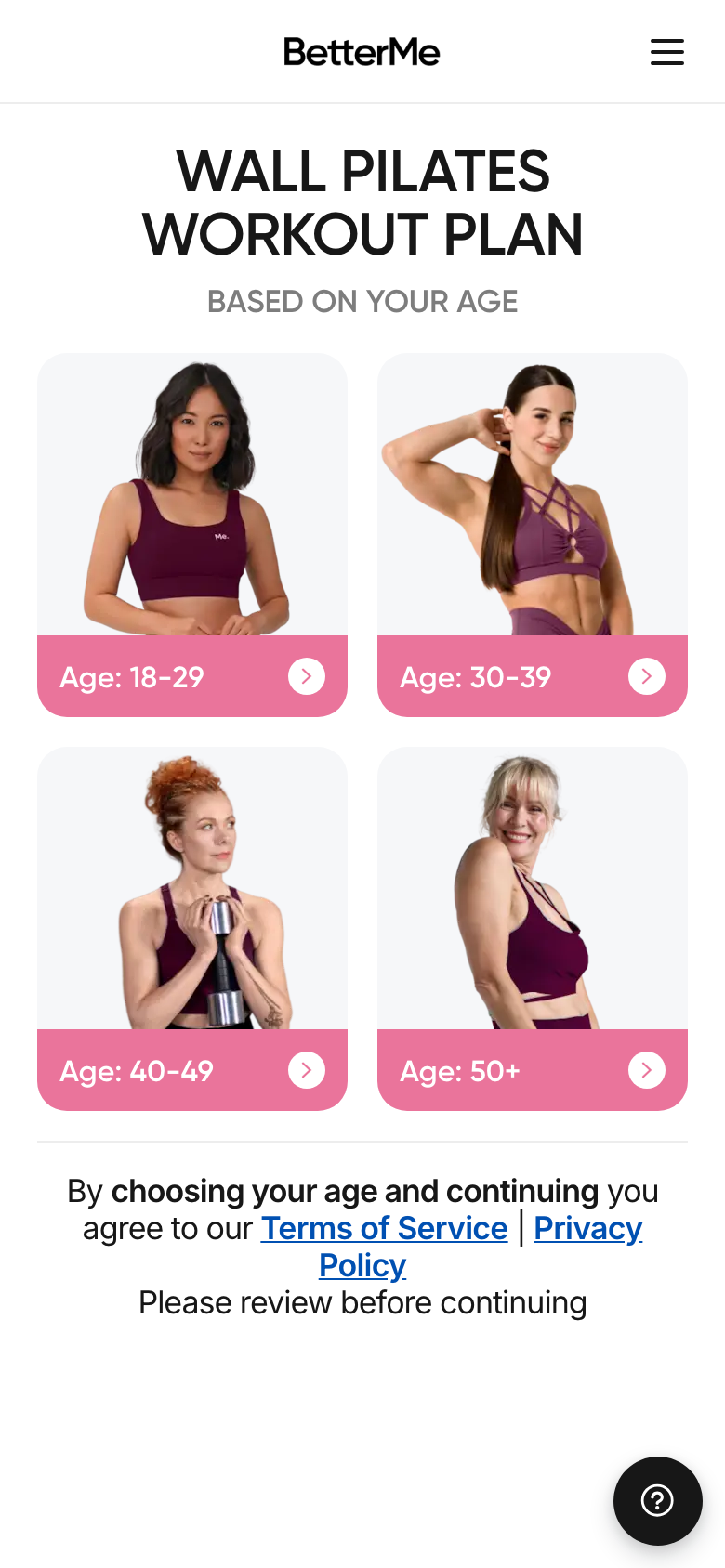
WALL PILATES WORKOUT PLAN BASED ON YOUR AGE
The funnel opens with a low-friction age segment and immediately frames the output as a personalized Wall Pilates plan.
Teardown
Ad creative signals, quiz structure, lead capture, discount mechanics, and the final checkout screen — 53 captured screens in order.
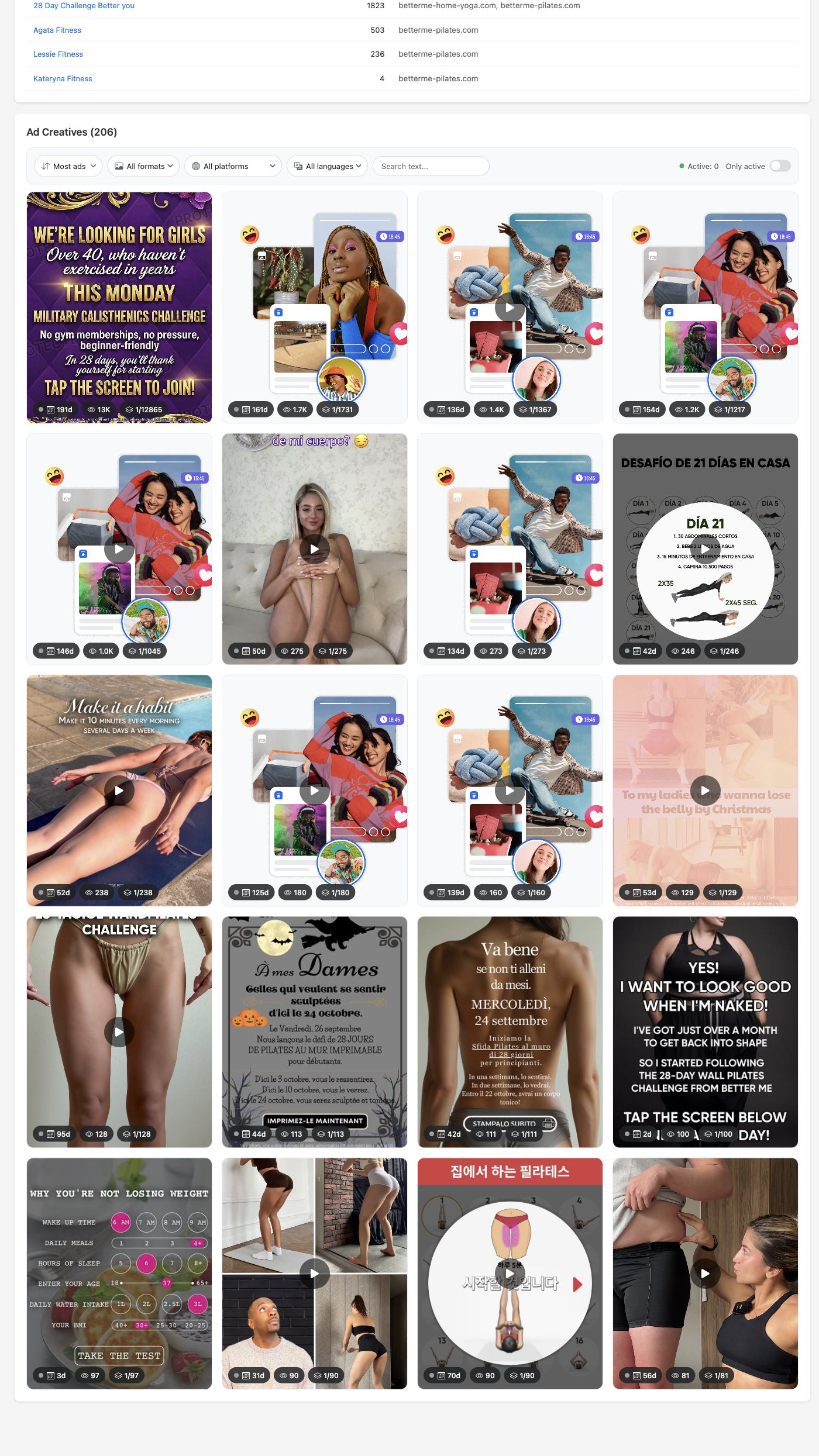
Observed concept: The creative set is built around challenge-style hooks, UGC-style visuals, body close-ups, localized variants, and simple promises such as at-home workouts, no gym, visible body change, and event-driven transformation. The ads do not explain the product in depth; they sell the click into a quiz/challenge.
Similarweb data for May 2026 shows betterme-pilates.com as a dedicated paid acquisition funnel: 470,899 estimated visits, 97.66% mobile web, and 62.57% of traffic from paid social.
Working media-spend estimate for this domain, based on Similarweb paid traffic volume, country mix, and public CPC benchmarks for paid social, paid search, and display.
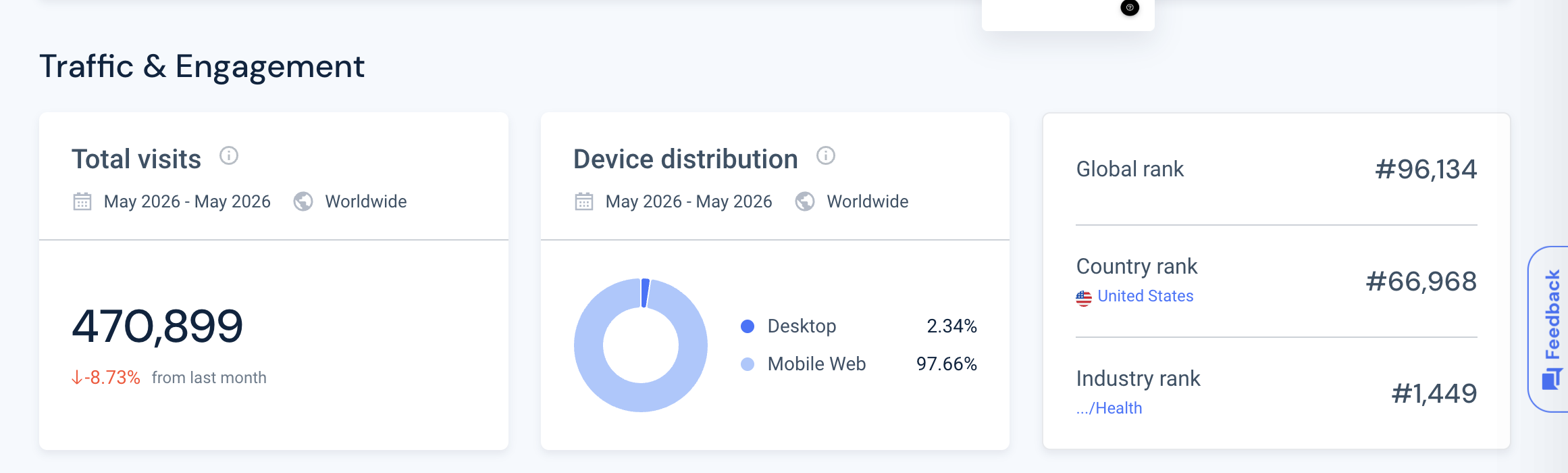
Traffic scale: 470,899 estimated visits in May 2026, with mobile web driving 97.66% of sessions.
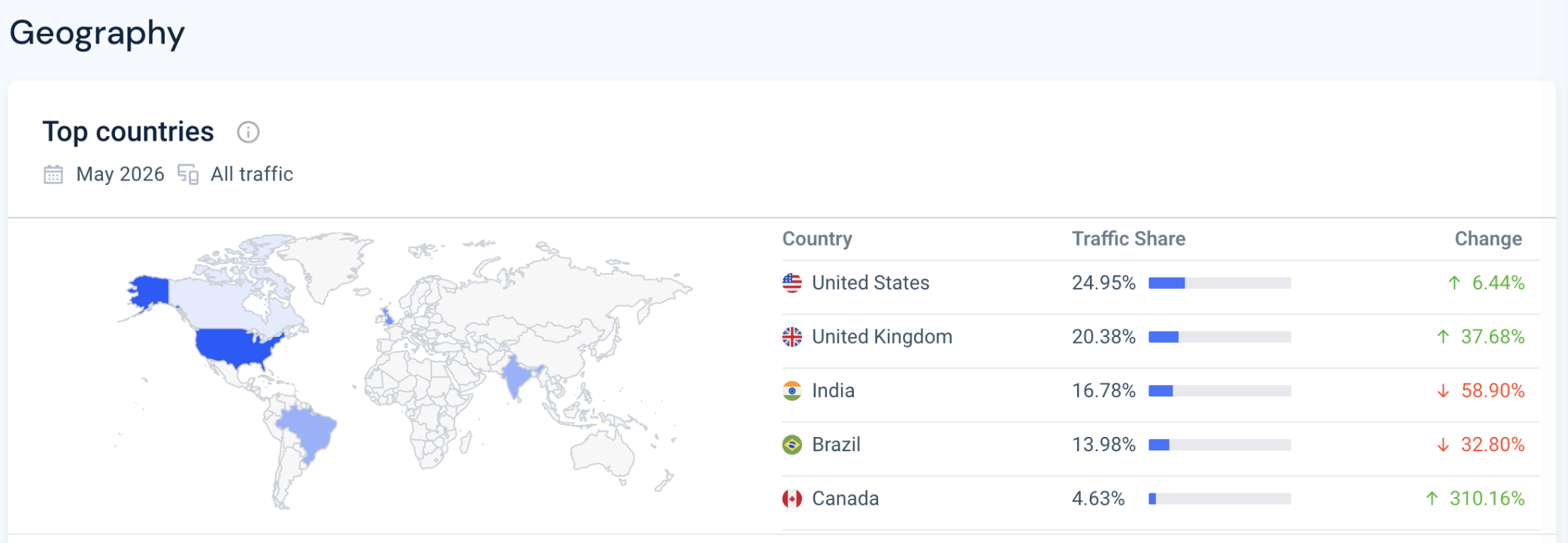
Geo mix: The largest visible markets are the United States, United Kingdom, India, Brazil, and Canada, which creates a blended CPC profile rather than a single-market cost.
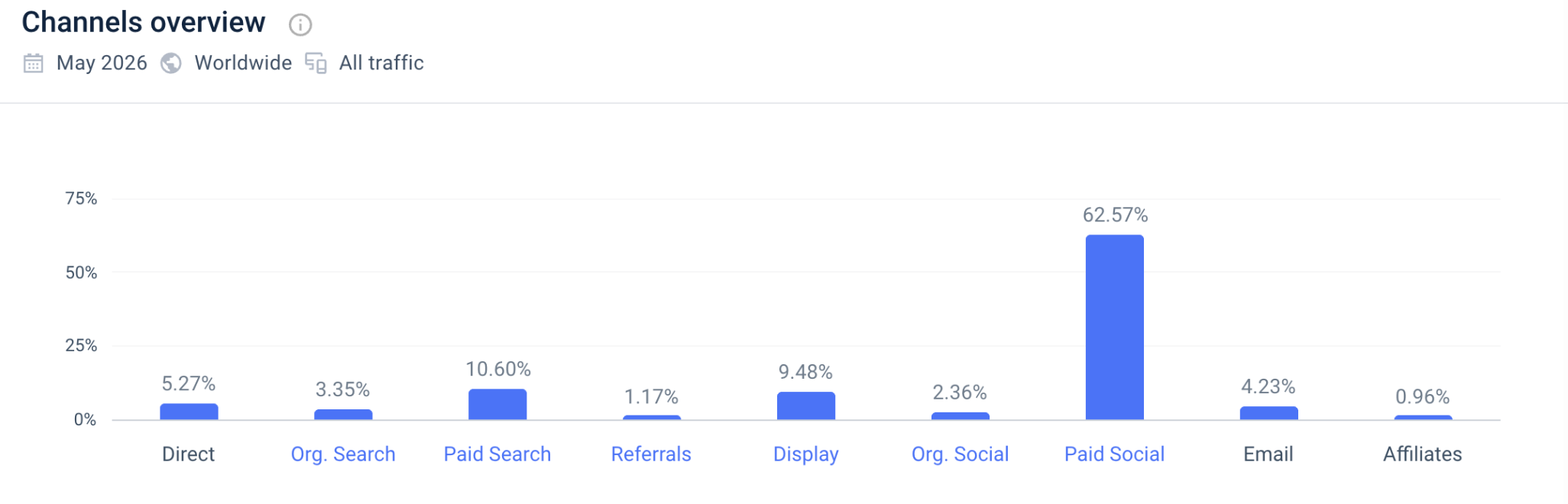
Channel mix: Paid social is the dominant acquisition source at 62.57%, with paid search and display adding another 20.08% combined.
Spend estimate is directional, not observed spend. Similarweb reports visits rather than paid clicks, and actual costs depend on platform mix, targeting, bidding objective, creative performance, and retargeting.
The funnel opens with a low-friction age segment and immediately frames the output as a personalized Wall Pilates plan.
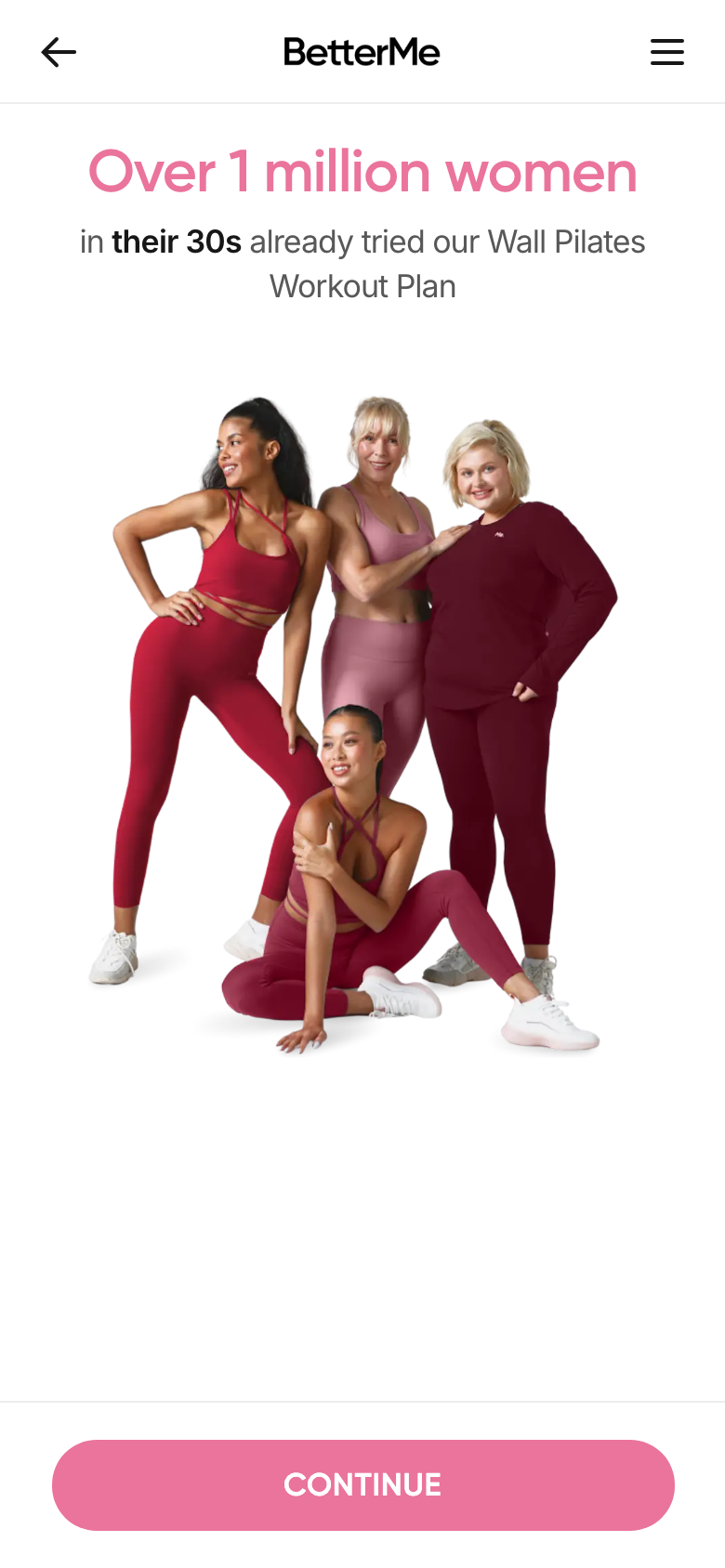
Social proof appears before the deeper questionnaire, reducing perceived risk and normalizing participation.
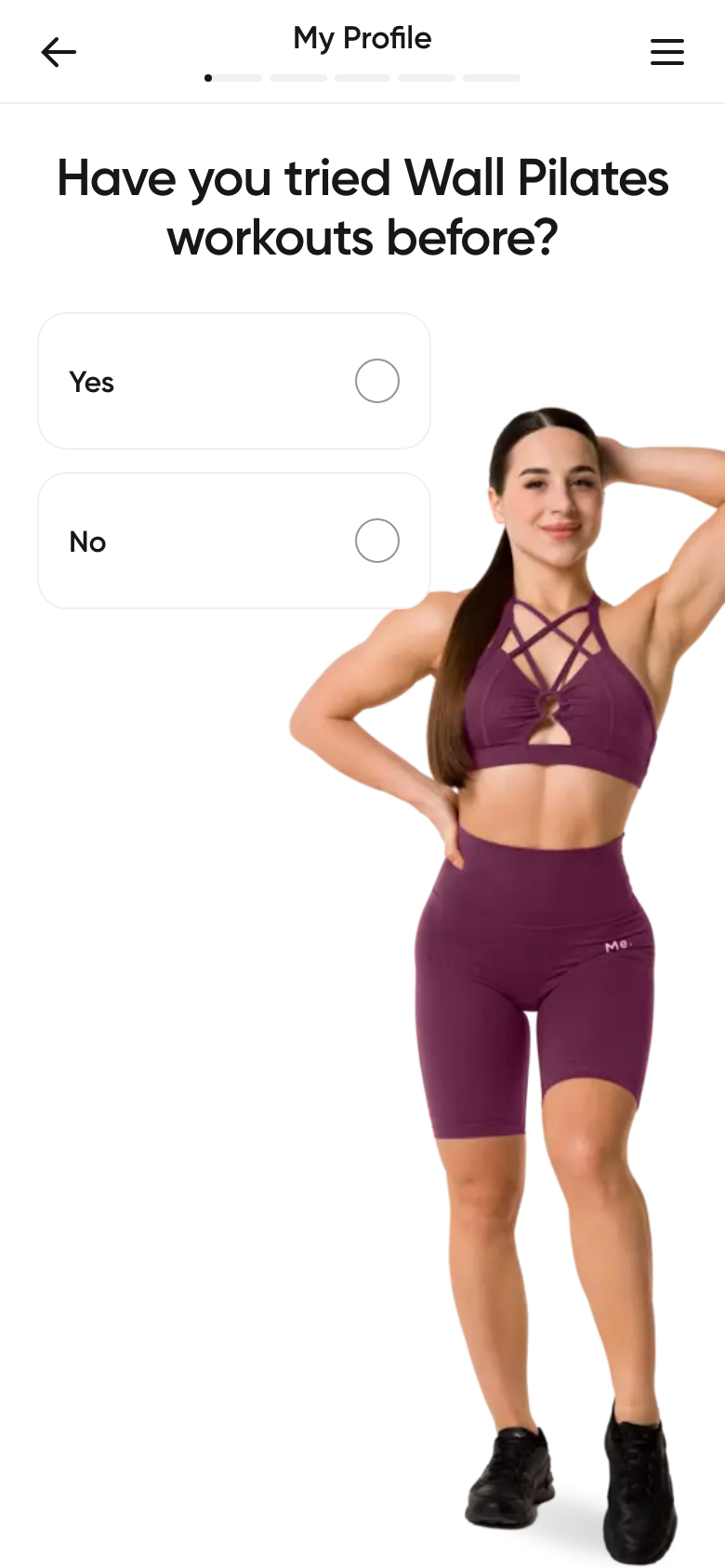
The quiz qualifies user experience level, enabling novice-friendly positioning later in the flow.
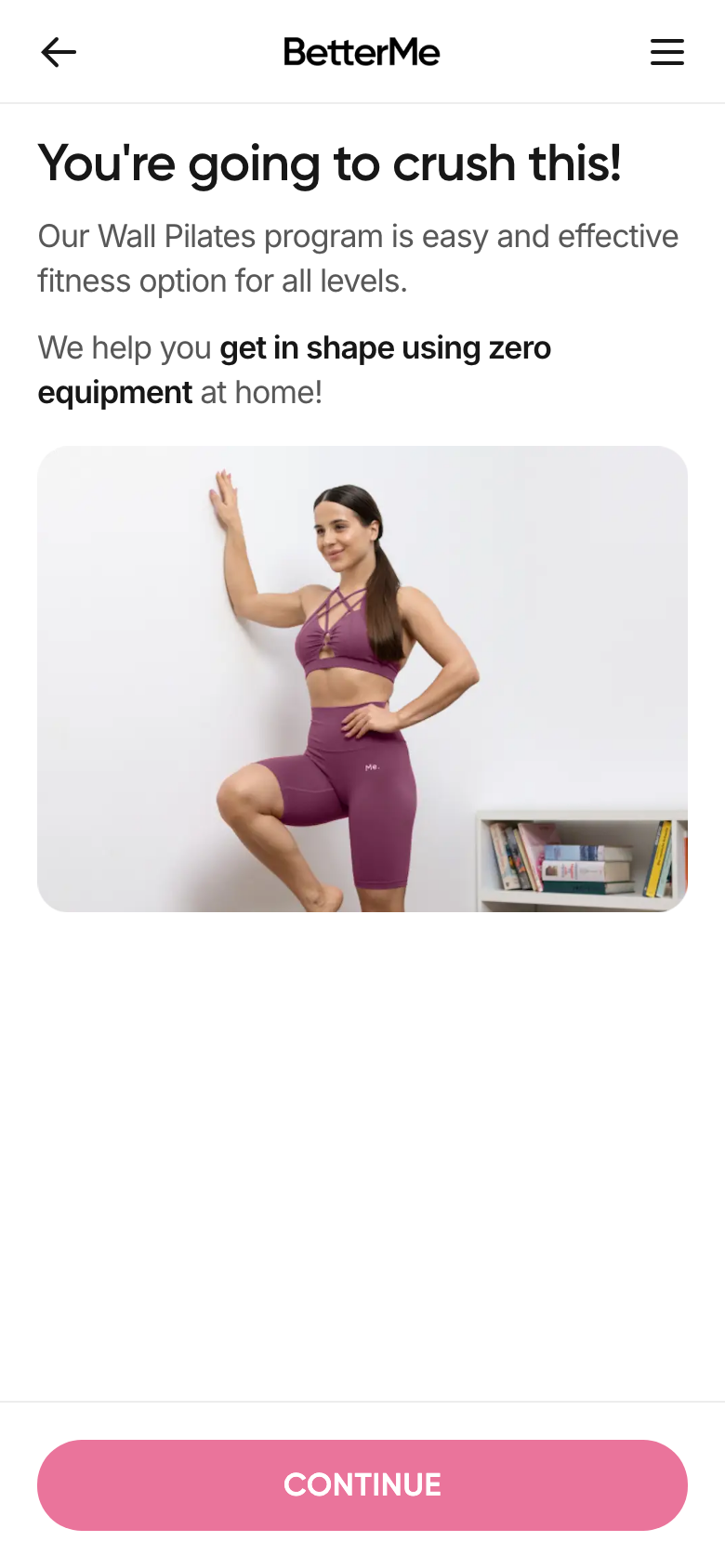
A motivational interstitial rewards the user after an answer and makes the flow feel less transactional.
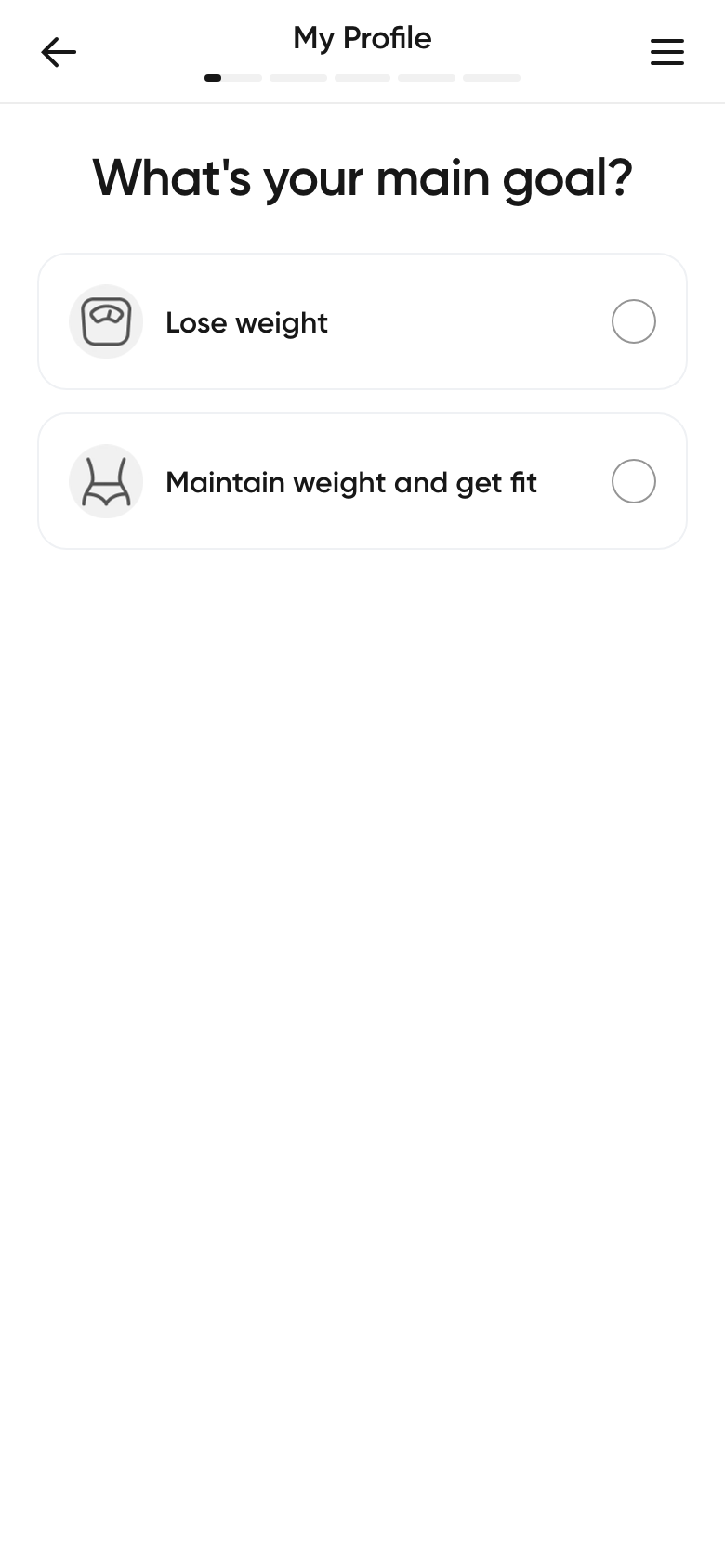
The first major intent split captures whether the user wants weight loss or maintenance, anchoring the offer.
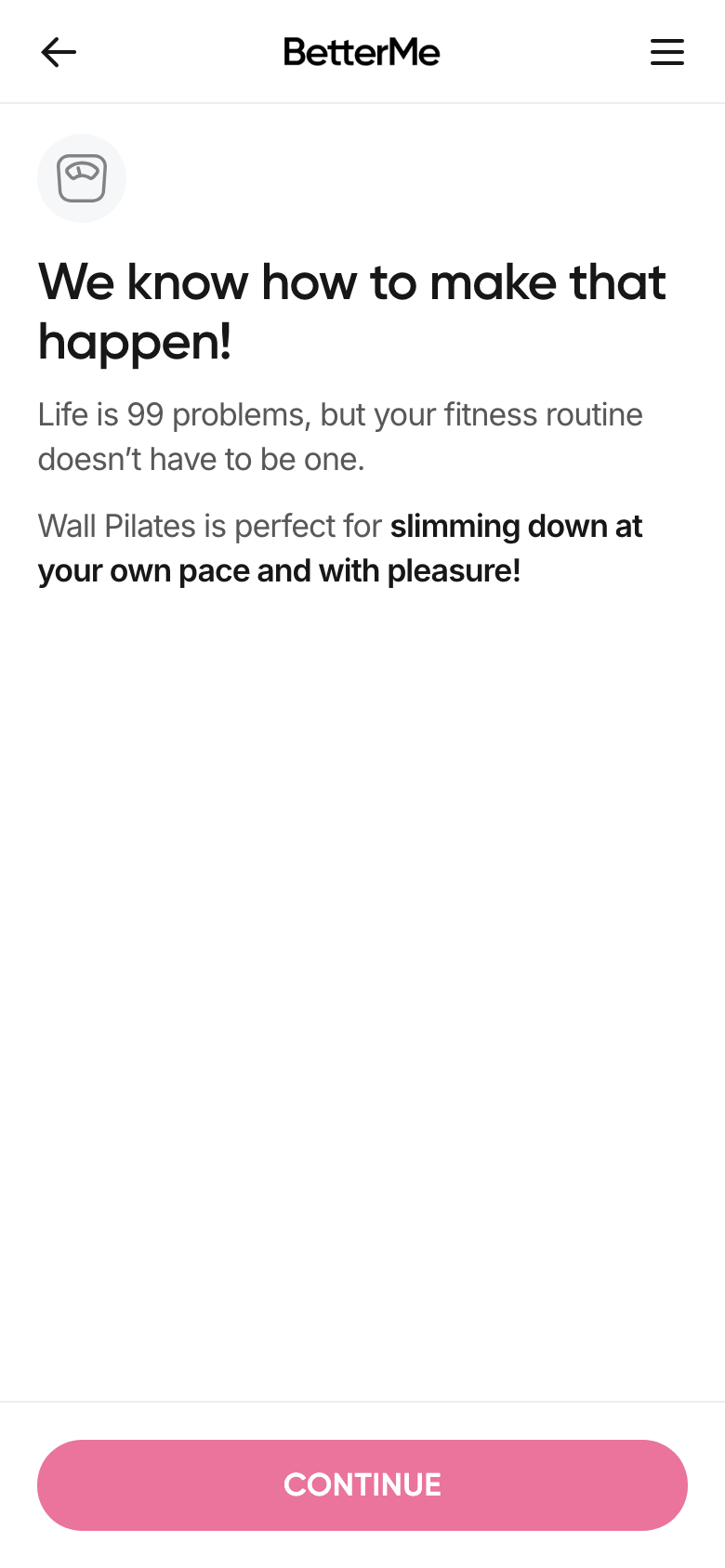
The selected goal is immediately validated, then connected to an at-home, low-pressure routine.
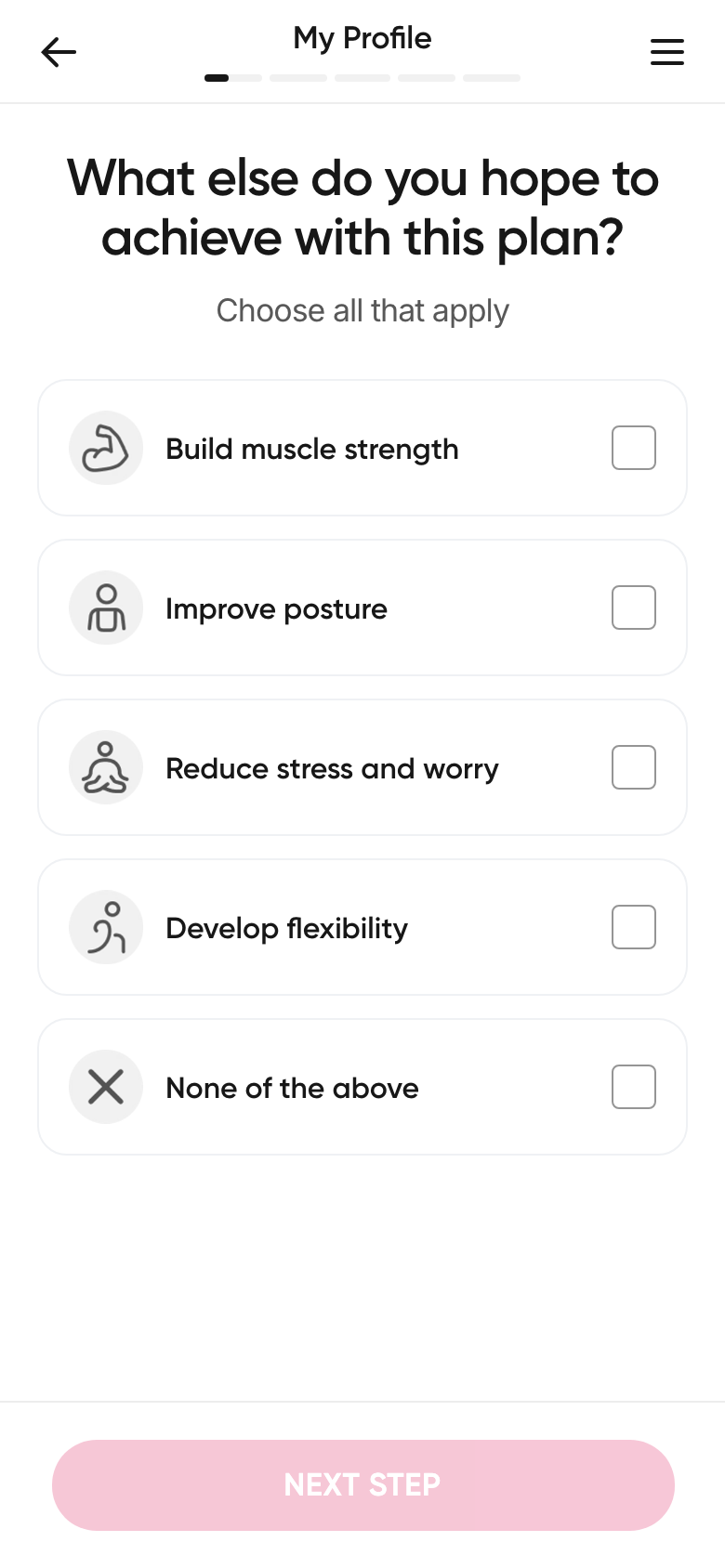
A multi-select screen expands the job-to-be-done beyond weight loss into strength, posture, stress, and flexibility.
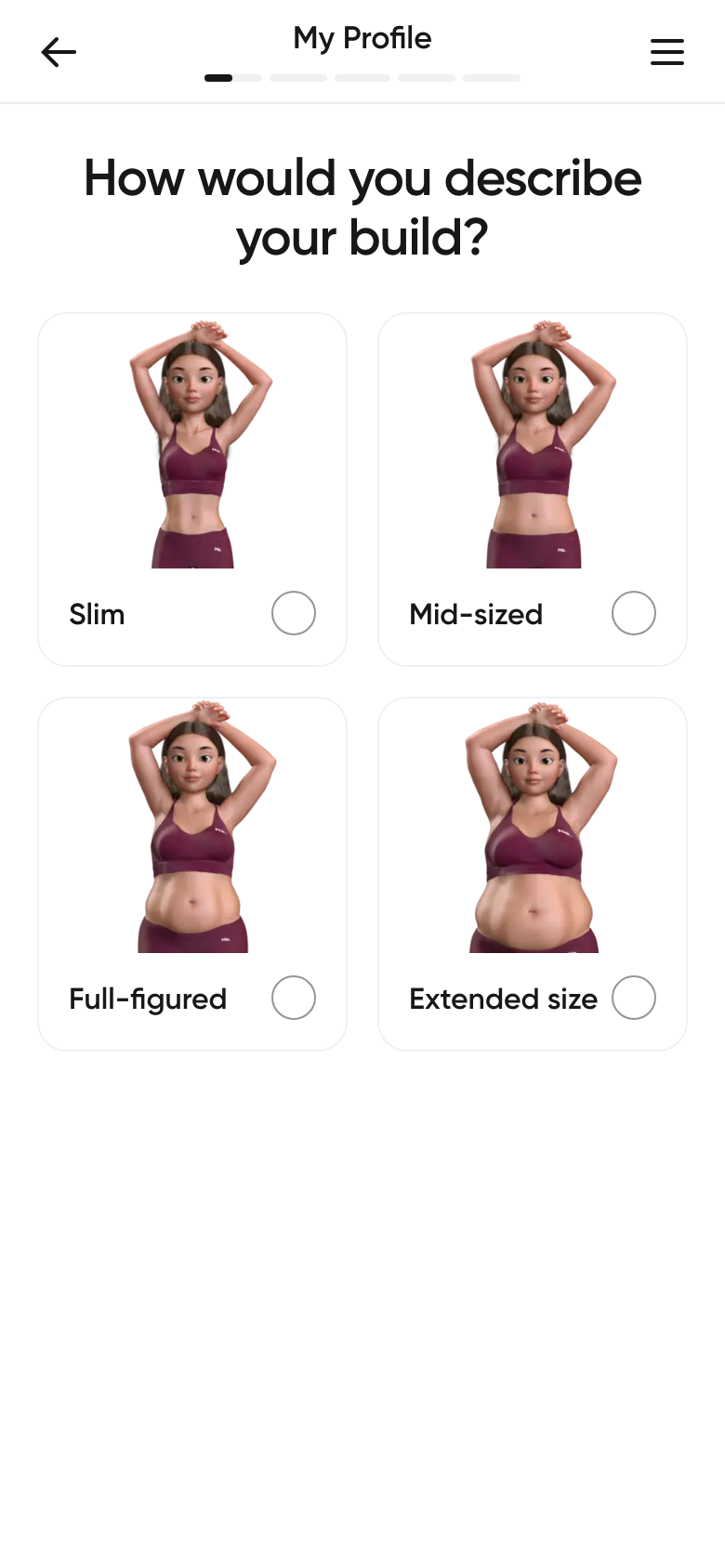
Current body self-perception is captured, making the plan feel more tailored to the user’s starting point.
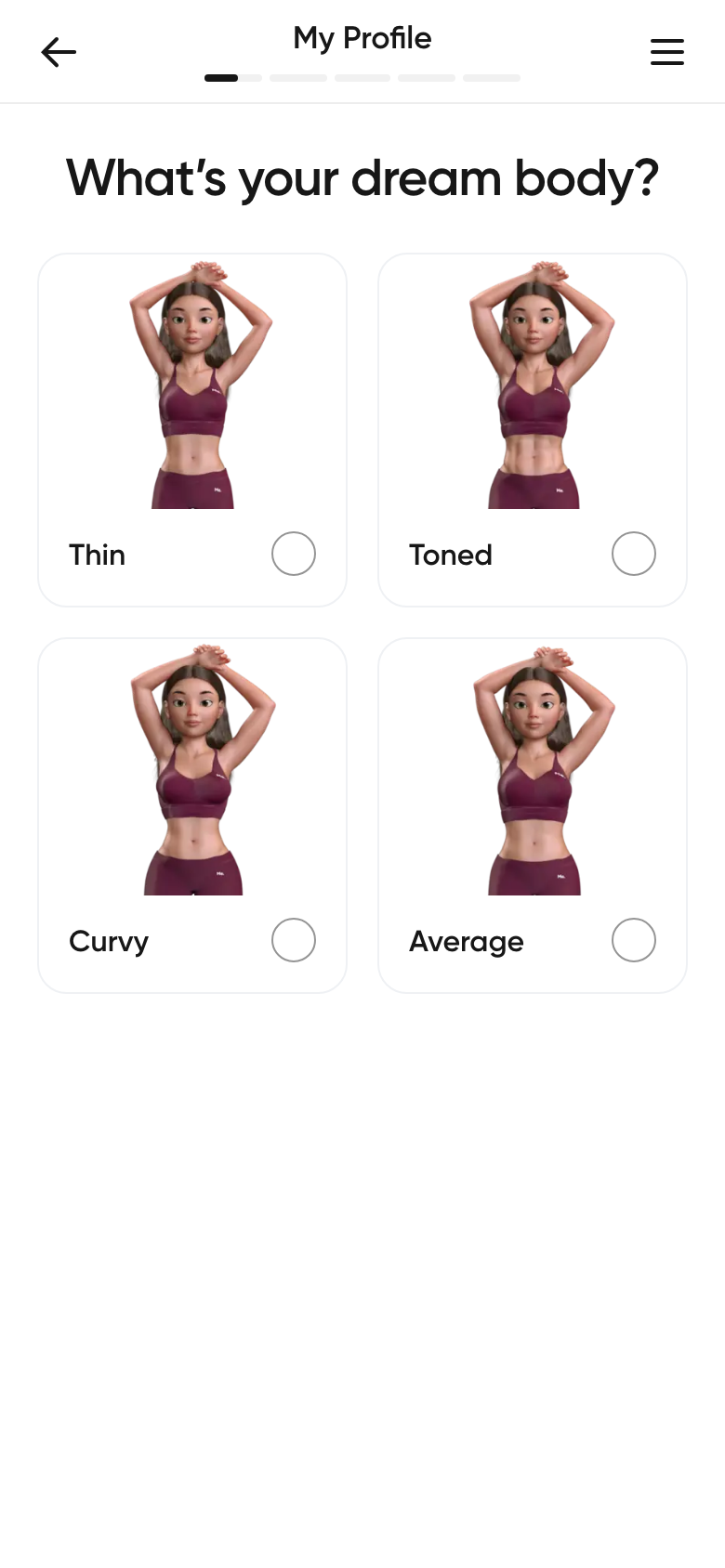
The funnel moves from functional goals to desired identity, increasing emotional investment.
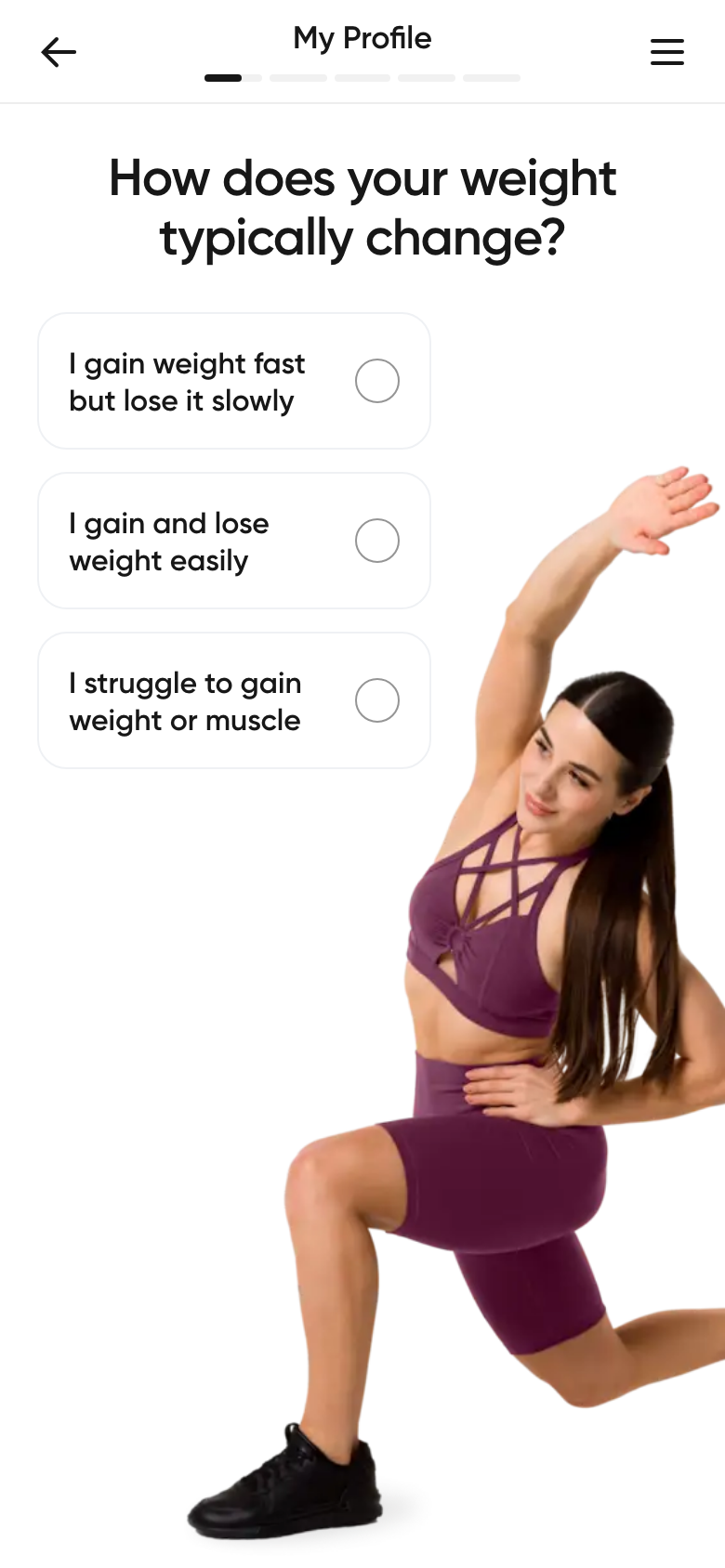
Perceived metabolism and difficulty are captured to justify a customized plan rather than a generic workout.
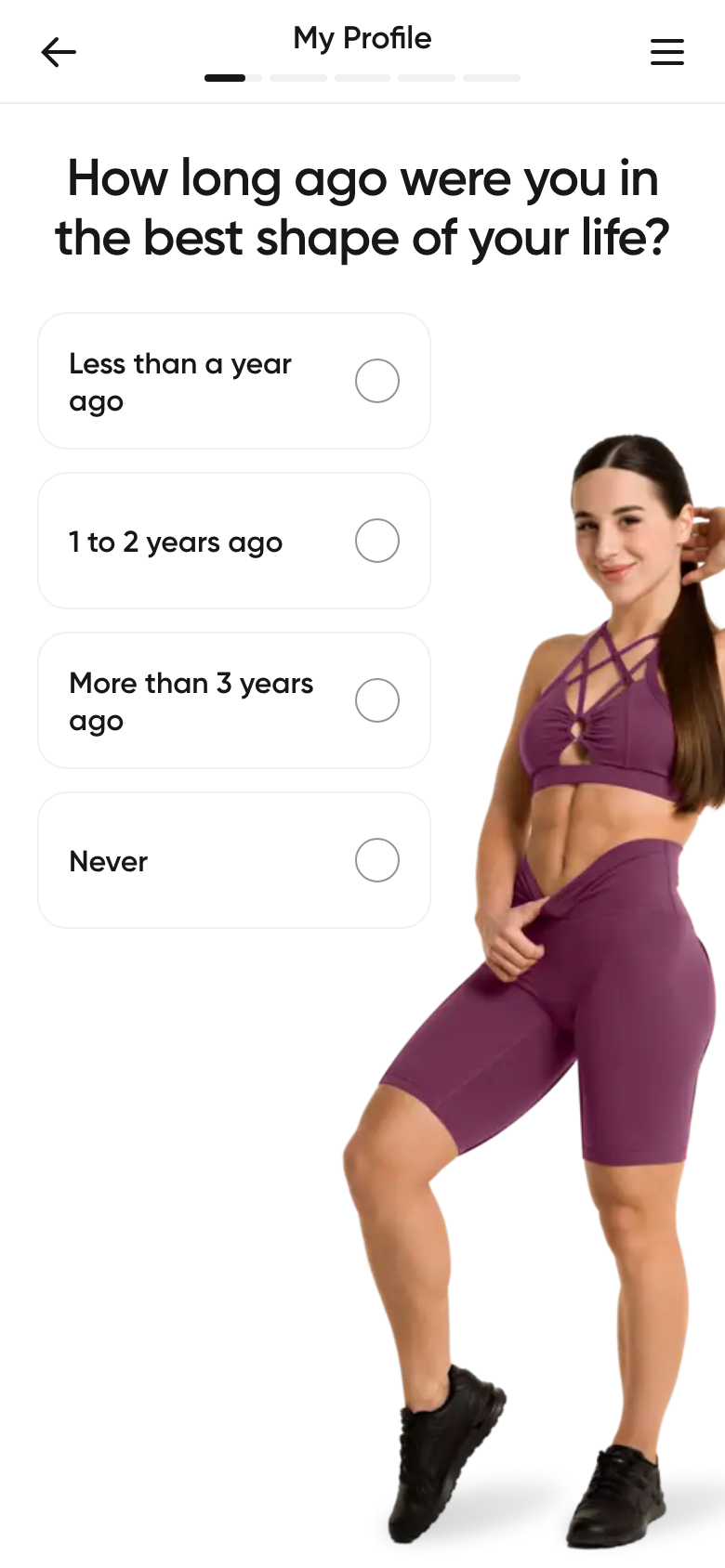
The question creates a before/after mental frame by reminding the user of a previous best-self state.
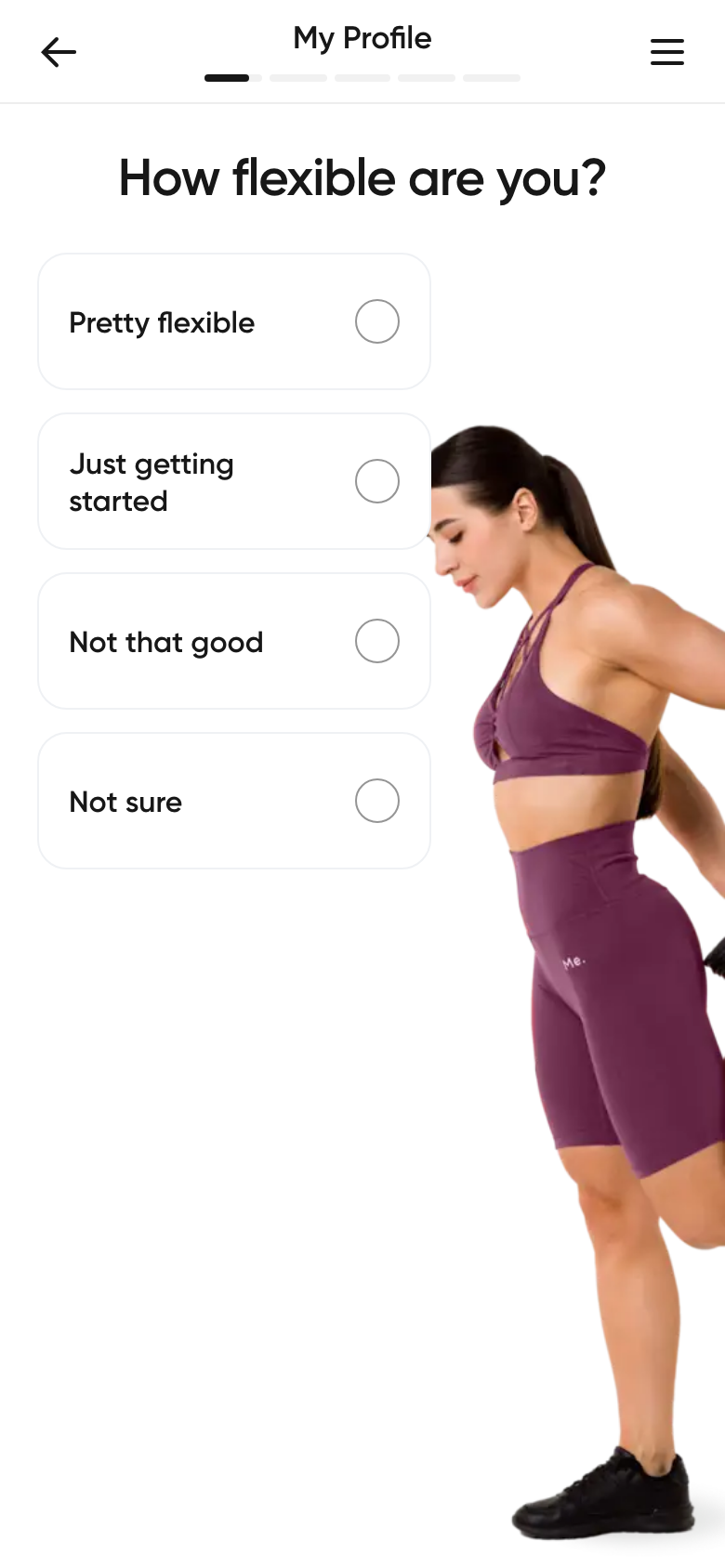
Flexibility is used as both a readiness signal and a natural bridge into the Wall Pilates product promise.
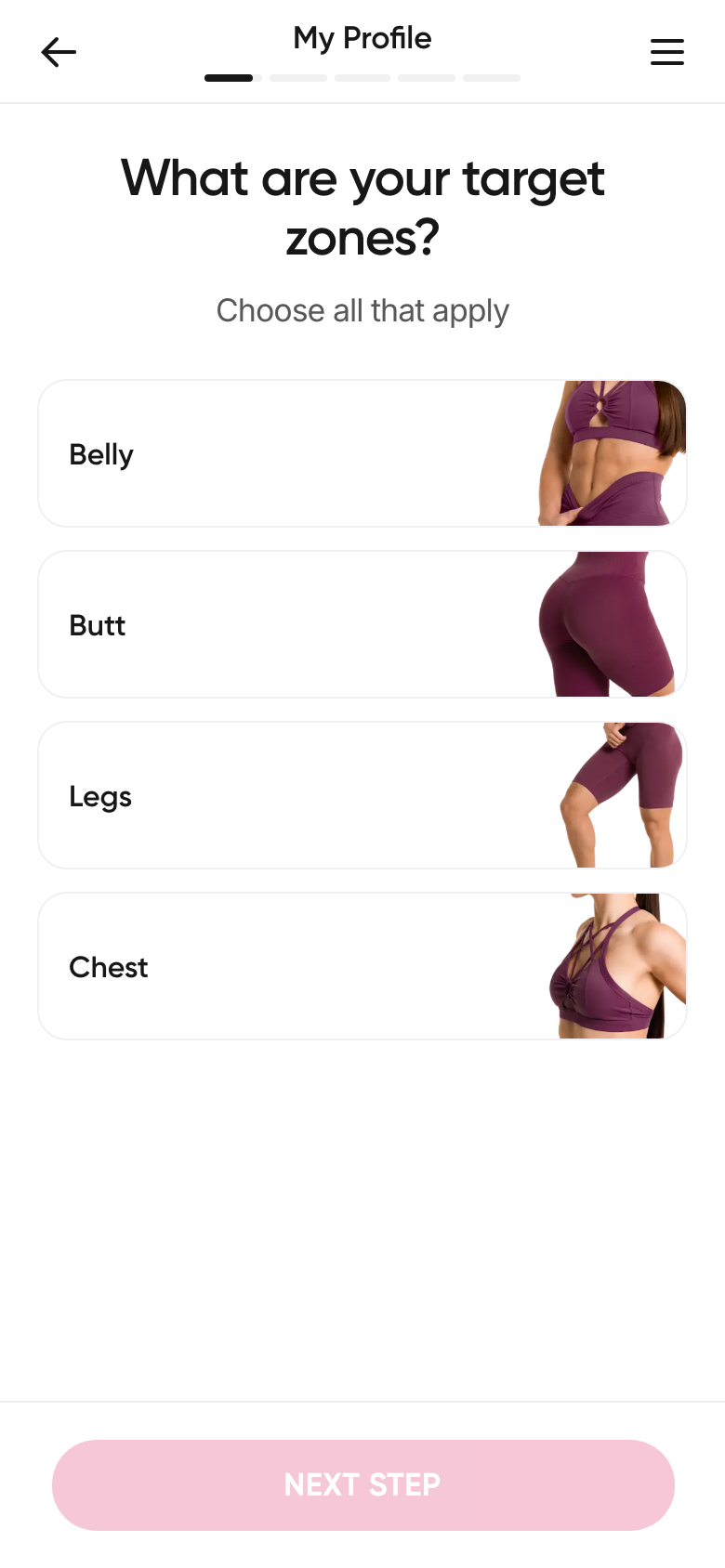
Target-zone selection turns the goal into specific body outcomes, strengthening perceived personalization.
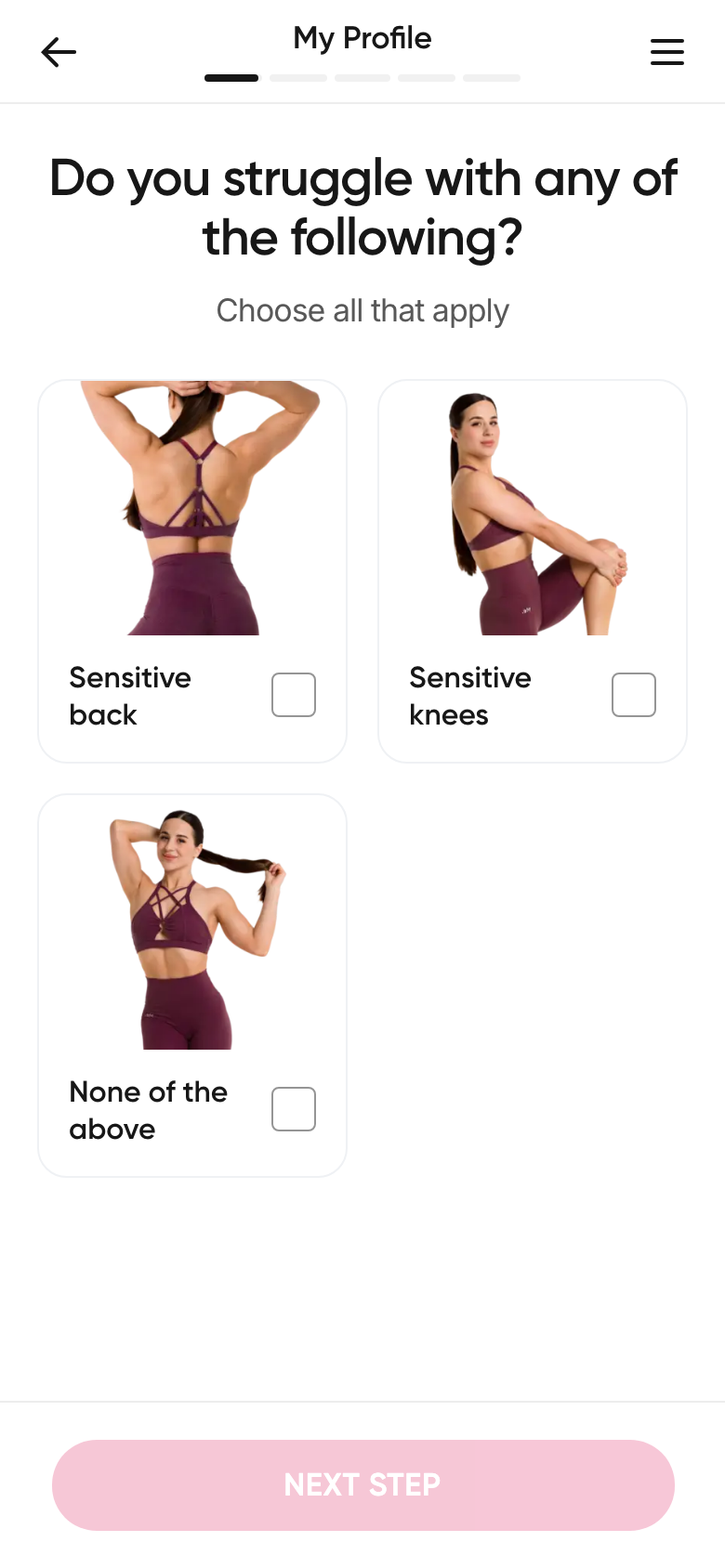
Health limitations are captured early so the product can position itself as gentle and accessible.
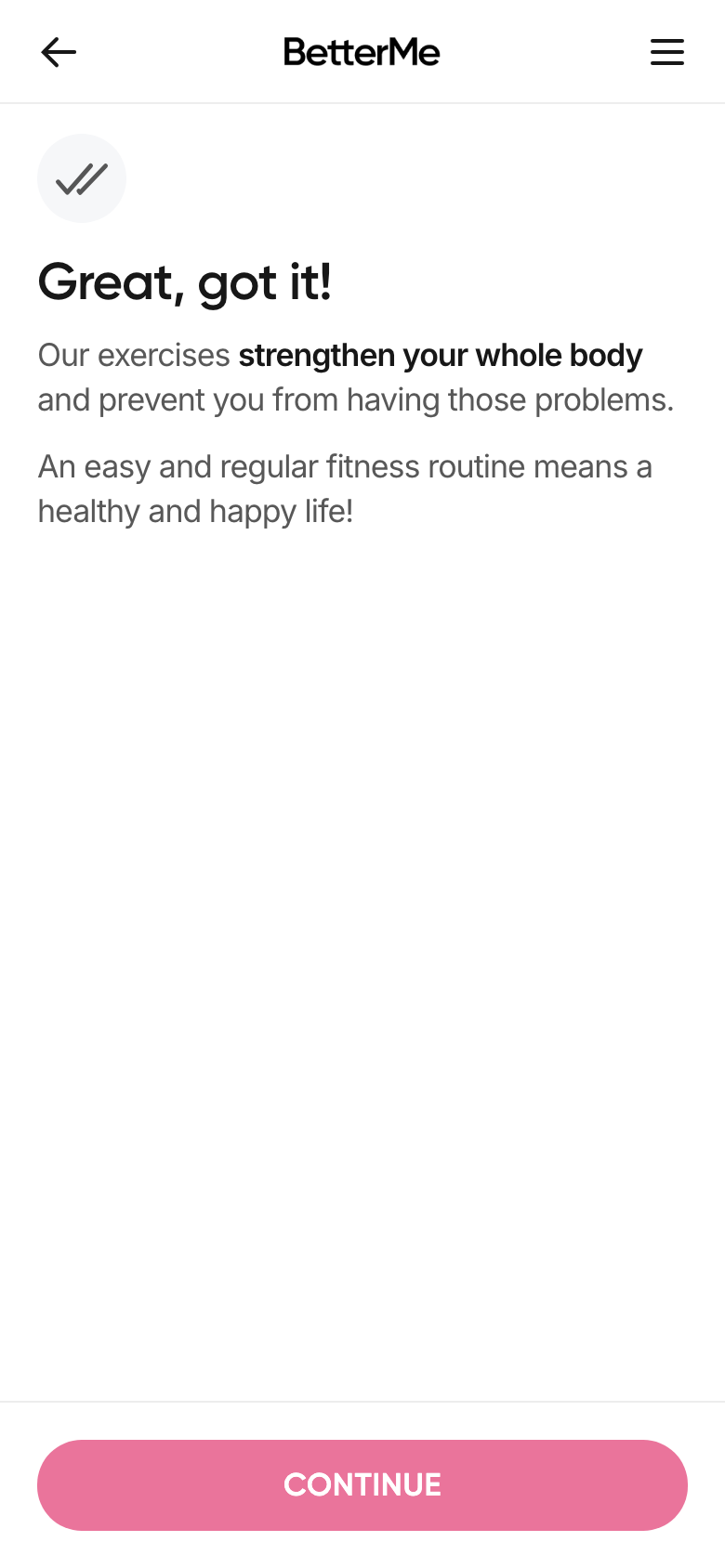
A reassurance screen reframes limitations as manageable with a safe, regular routine.
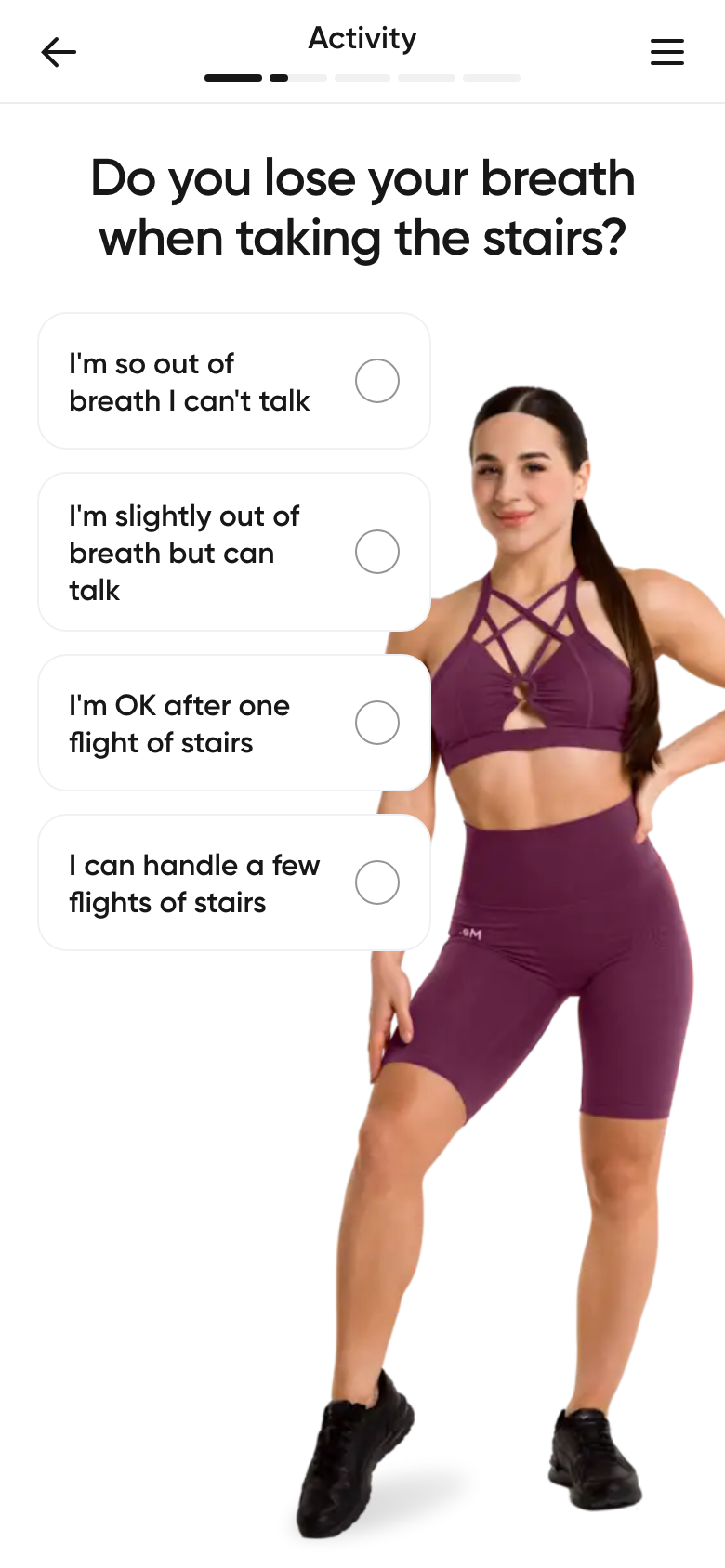
Baseline fitness is assessed in plain language, keeping the quiz approachable for low-confidence users.
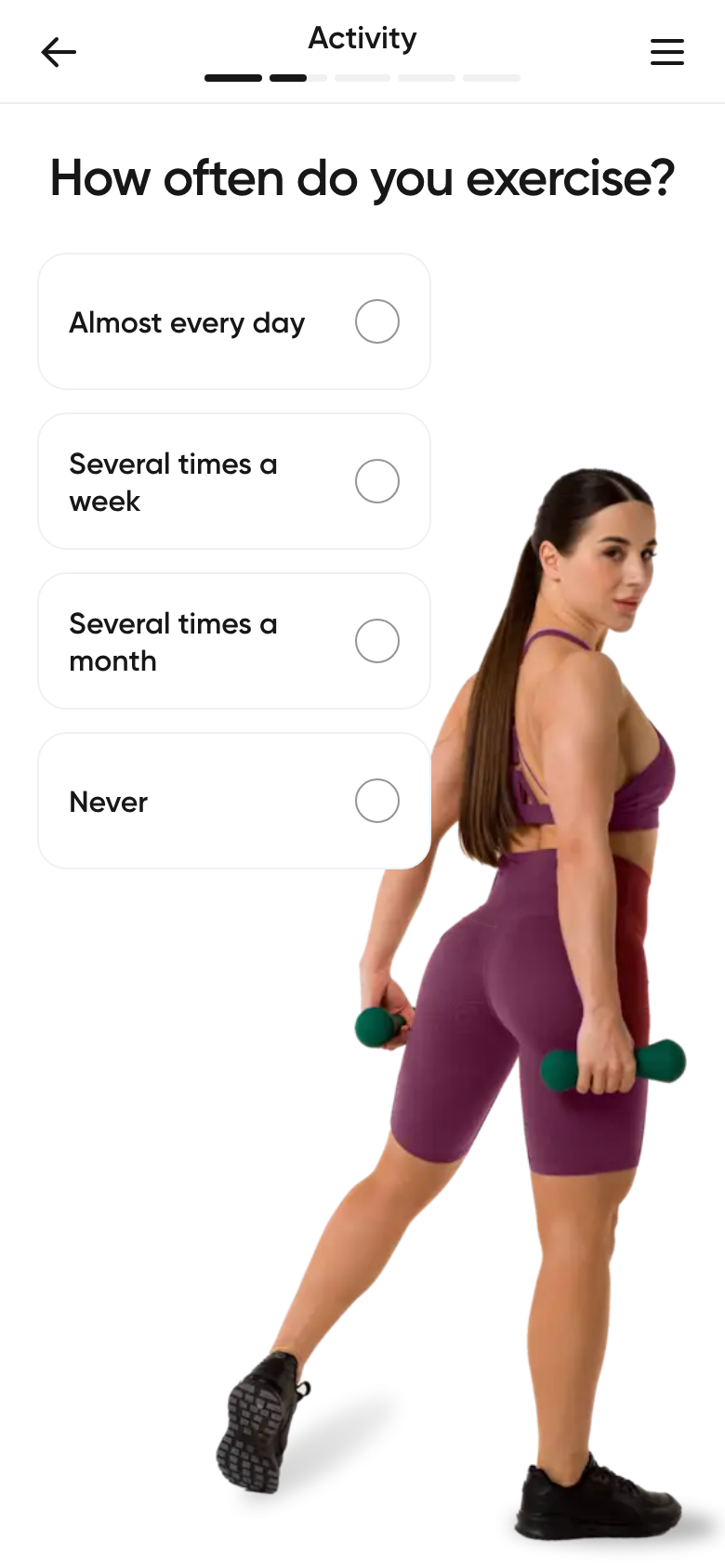
Workout frequency provides another readiness signal and supports beginner-friendly plan logic.
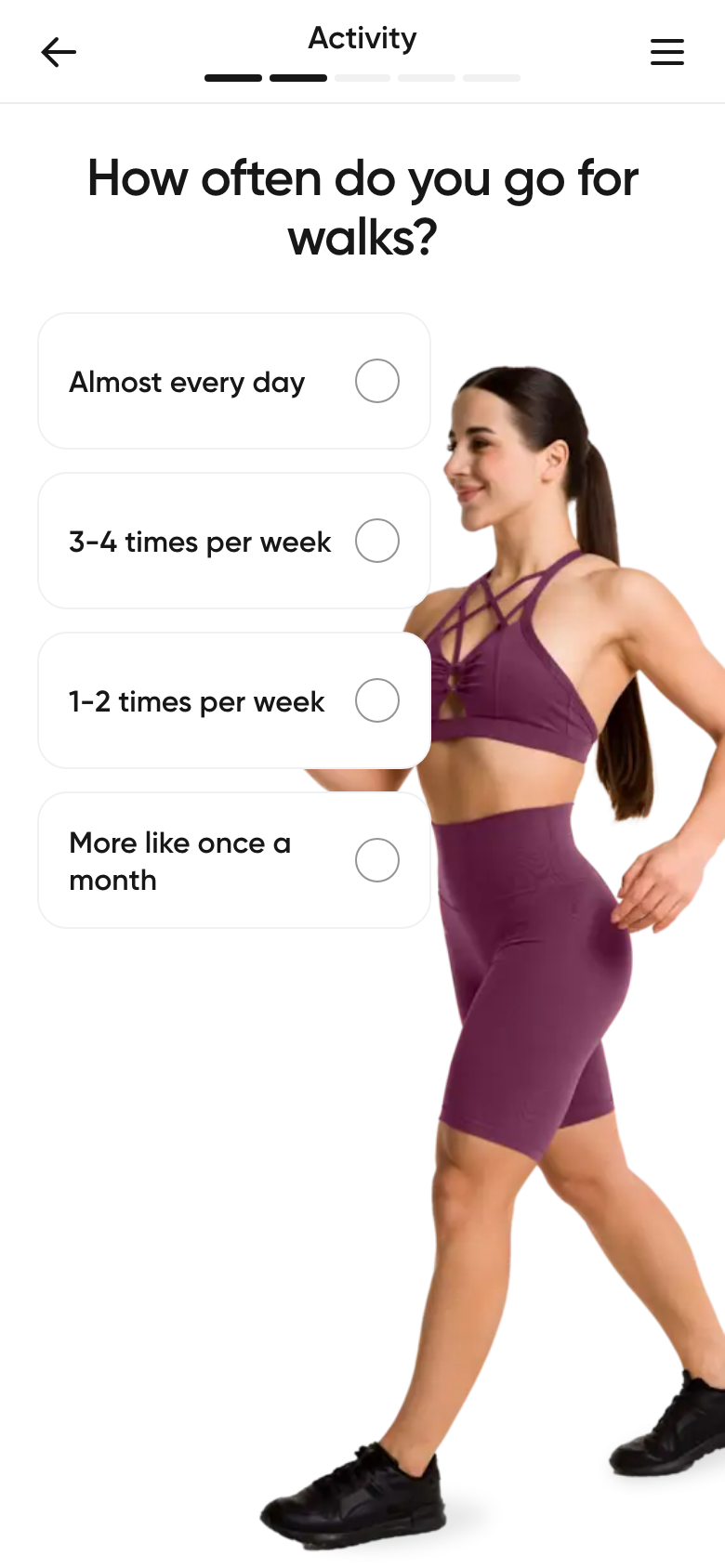
Walking frequency captures everyday activity without making the user feel like they are being tested.
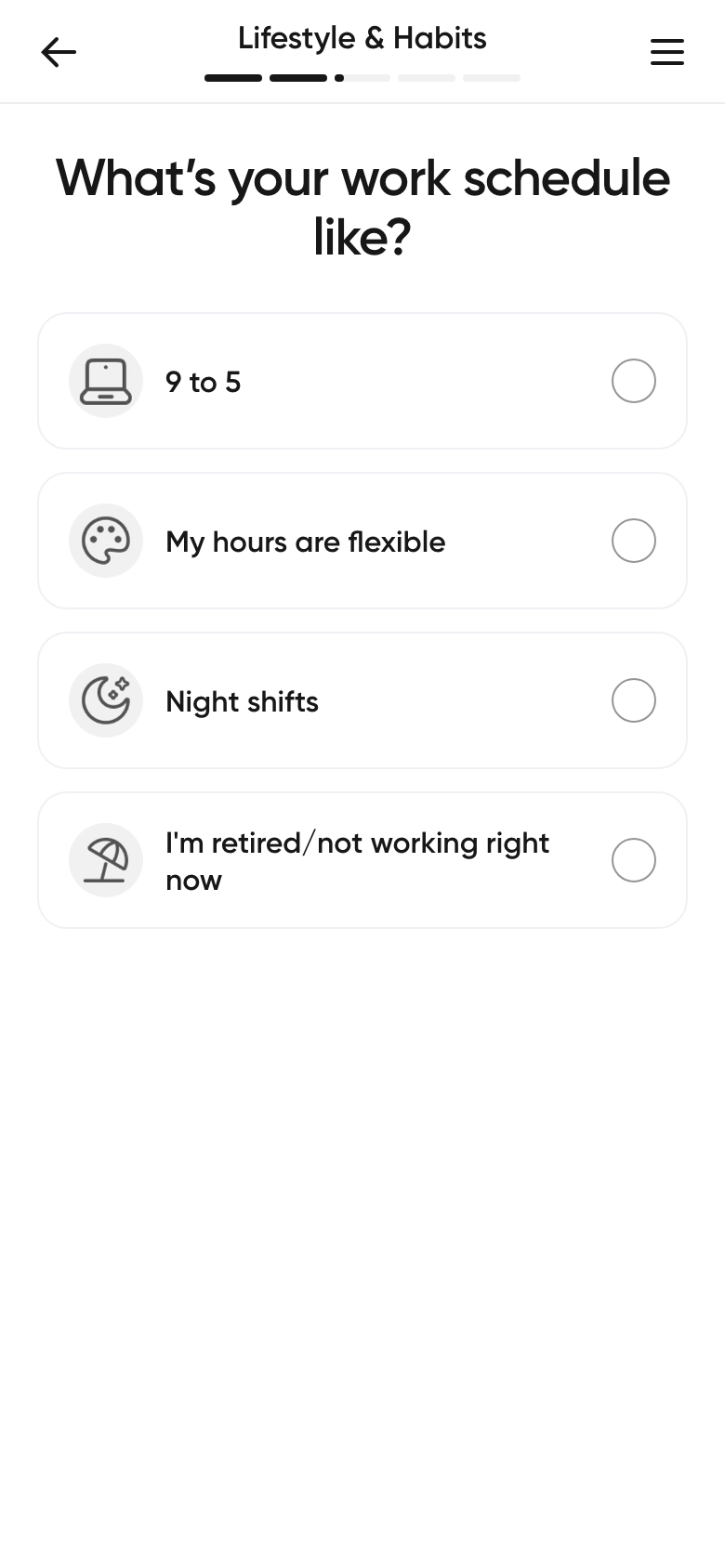
Flexibility is used as both a readiness signal and a natural bridge into the Wall Pilates product promise.
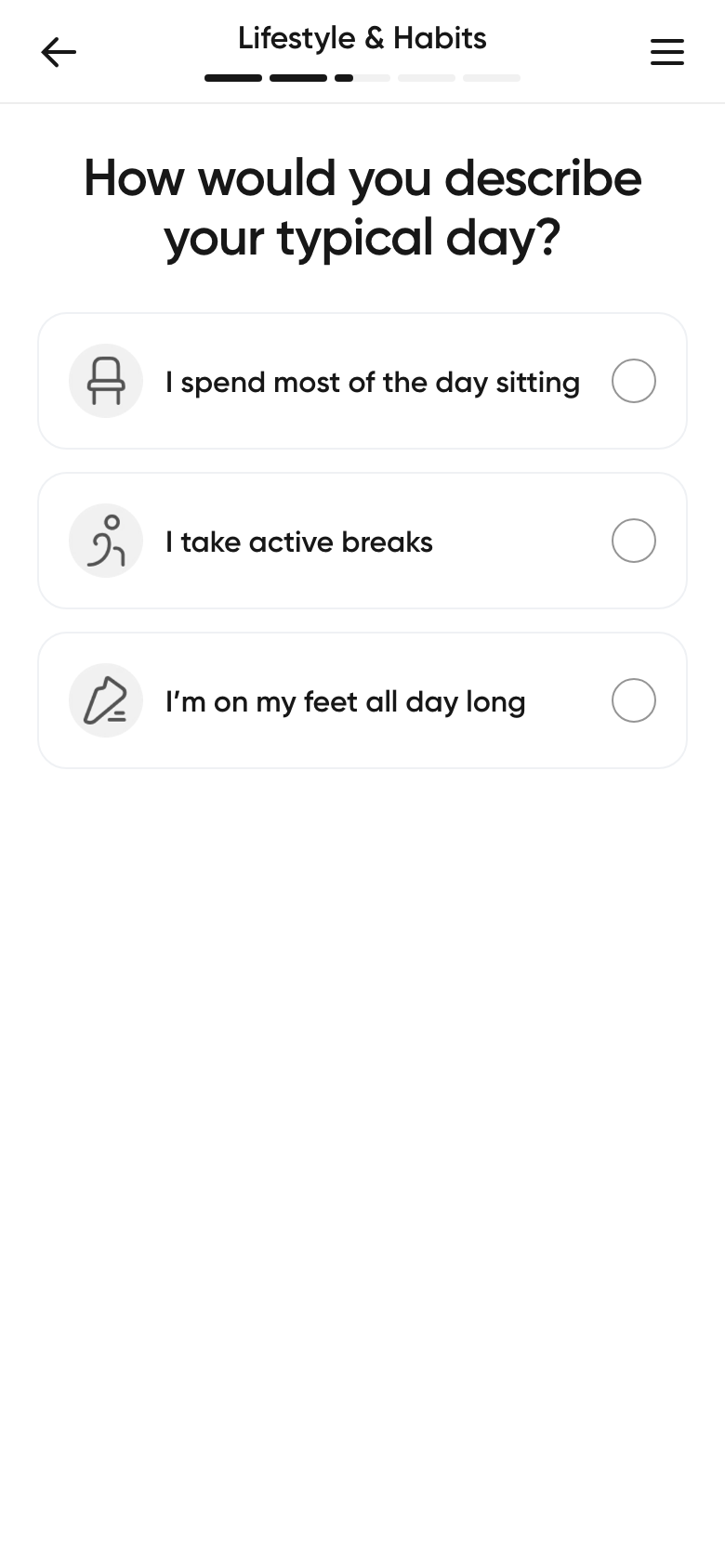
A sedentary-day question directly connects the user’s lifestyle to the need for an at-home movement plan.
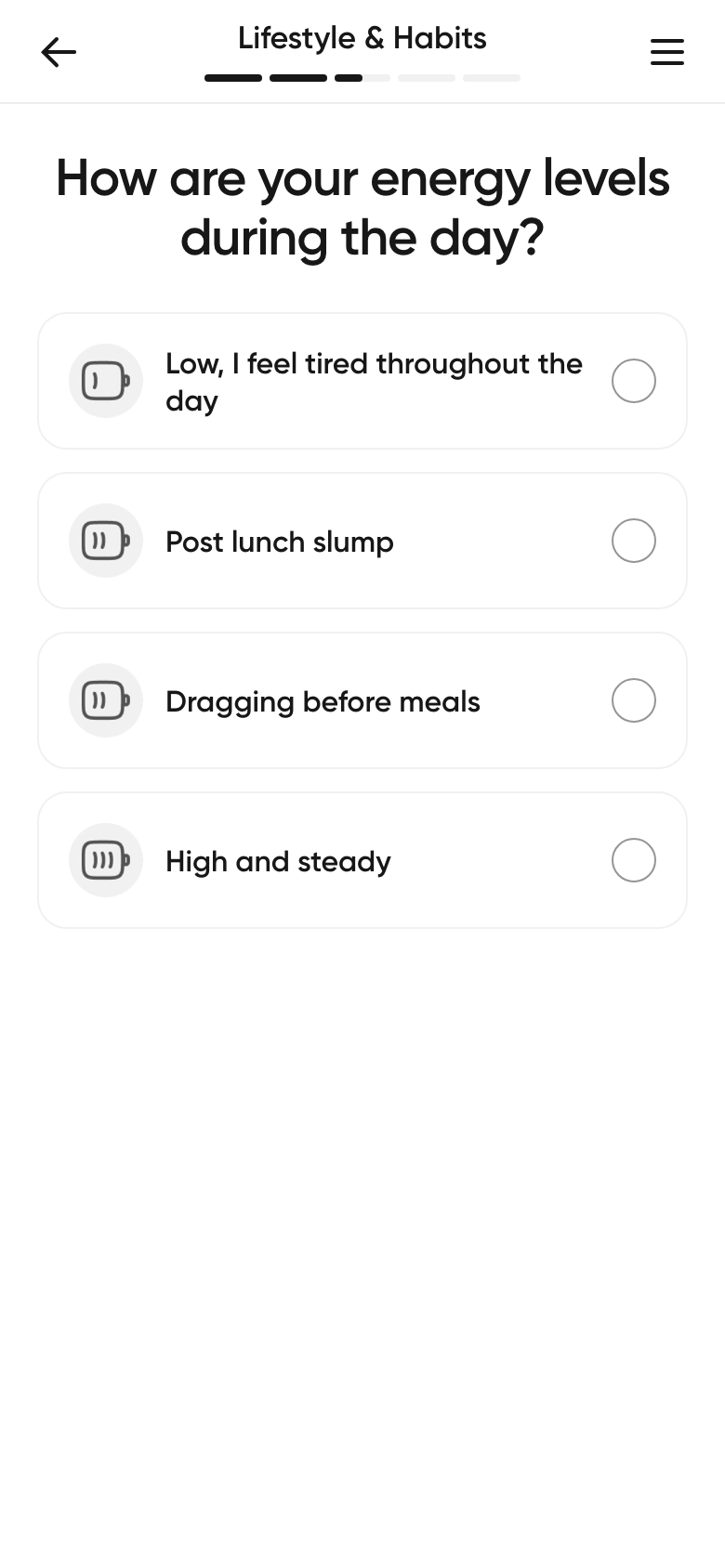
The value proposition expands from appearance to wellness, energy, and daily performance.
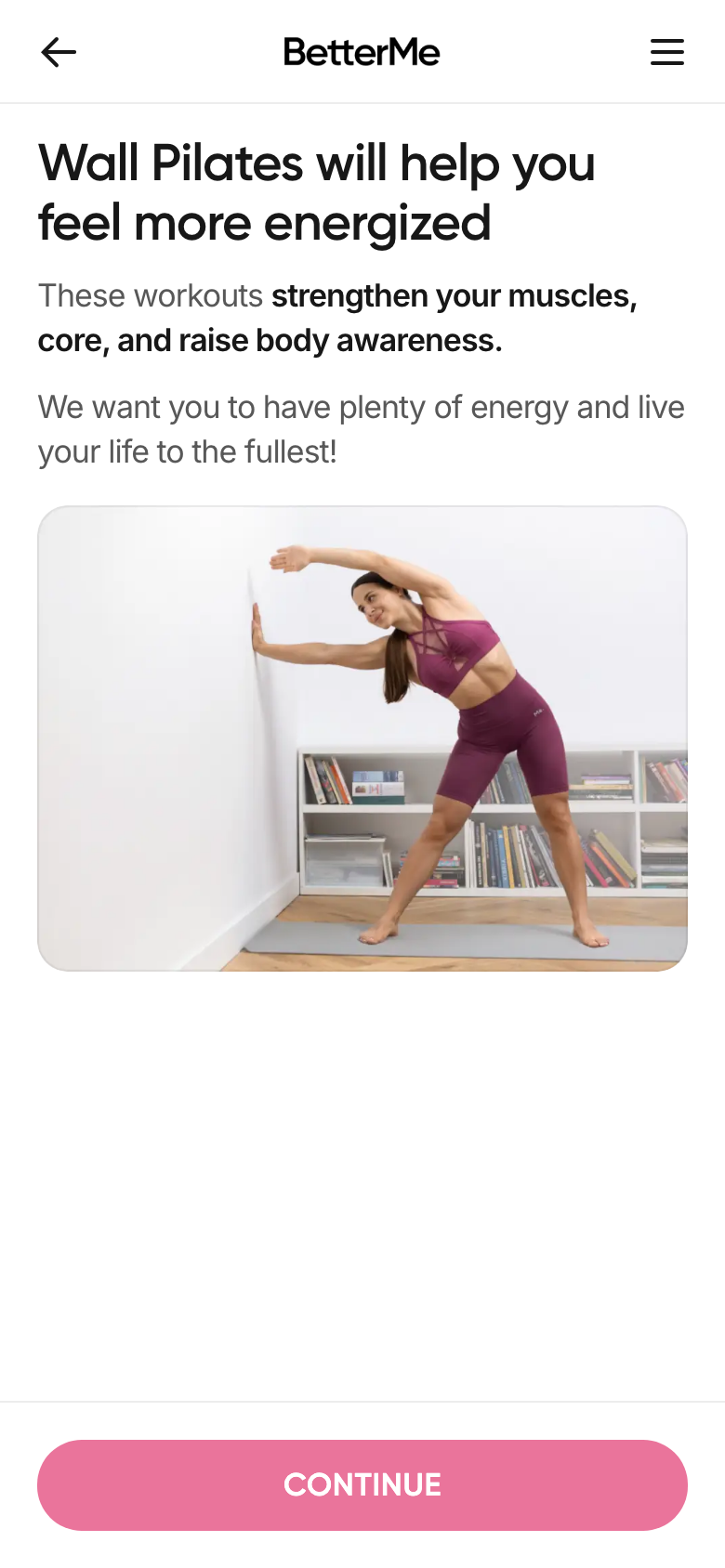
An educational interstitial explains the benefit of the routine and keeps the user moving through the quiz.
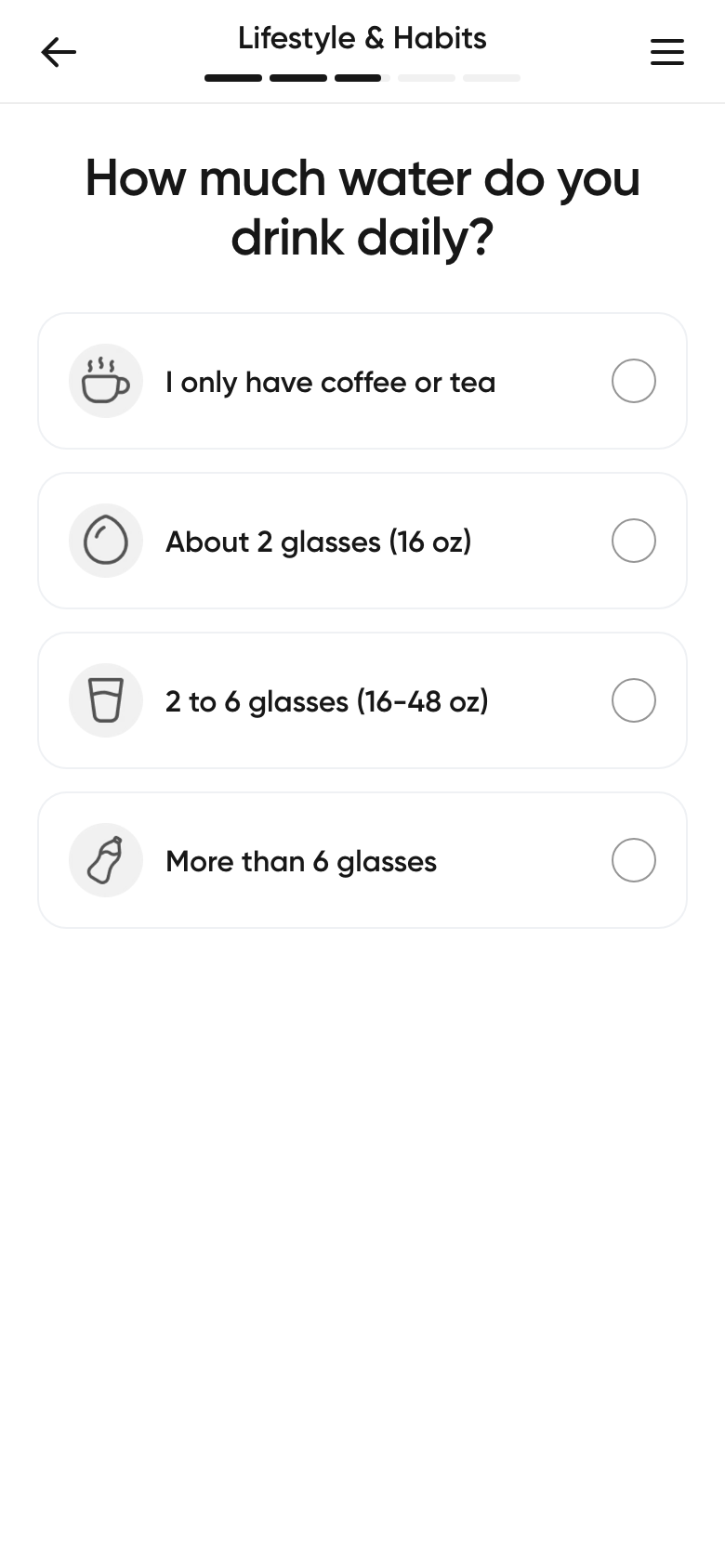
Lifestyle data increases the perceived depth of personalization and broadens the plan beyond workouts.
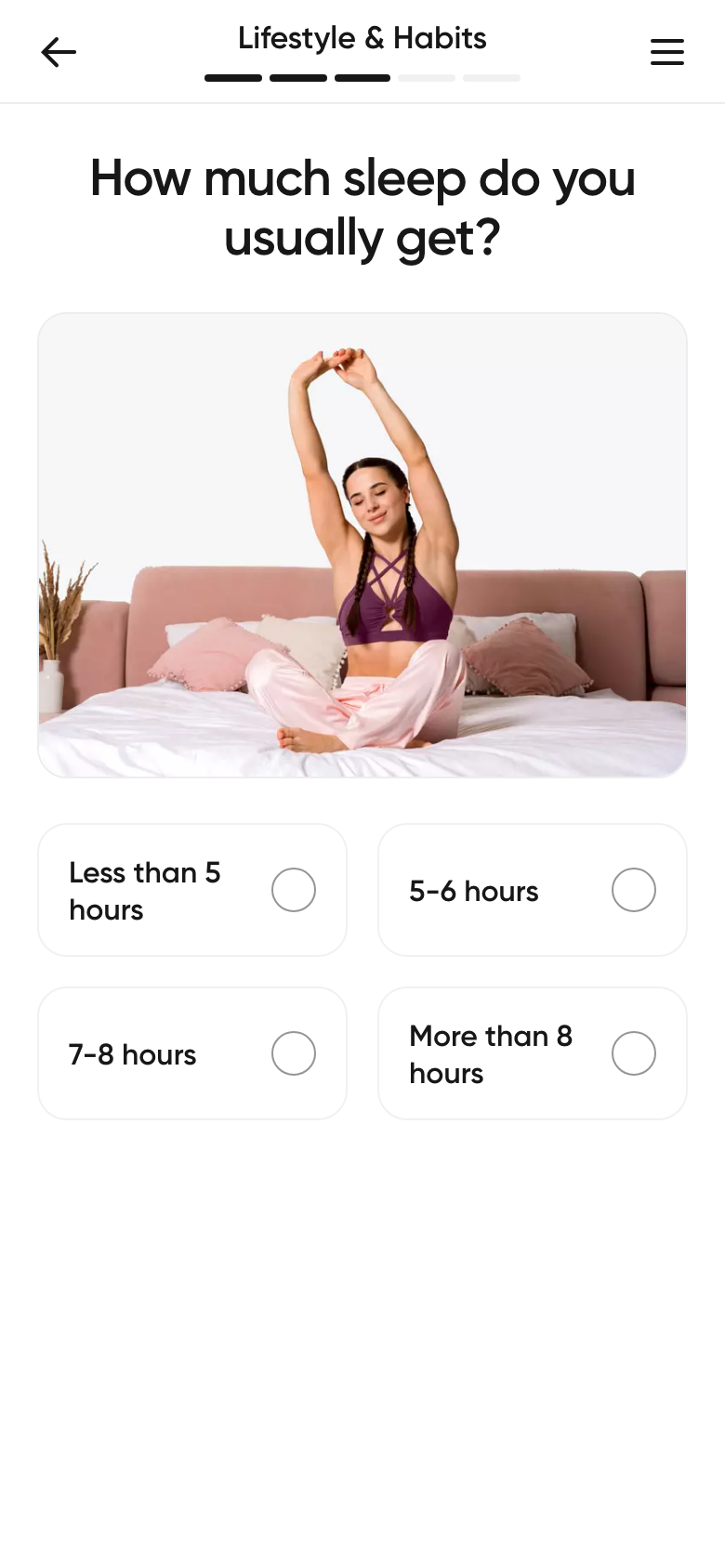
Sleep is added as a wellness variable, reinforcing the idea of a comprehensive program.
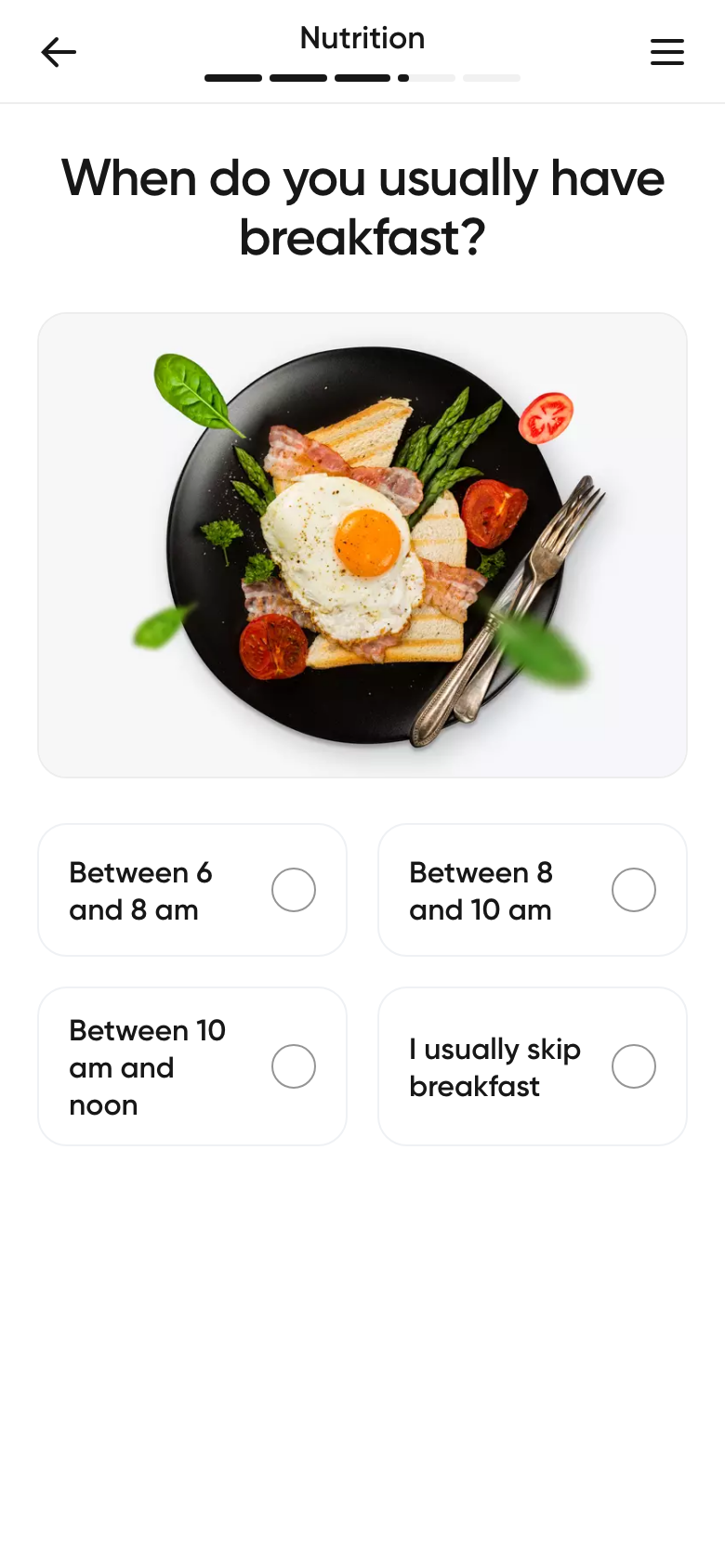
Nutrition timing is introduced gradually, supporting the later meal-plan value proposition.
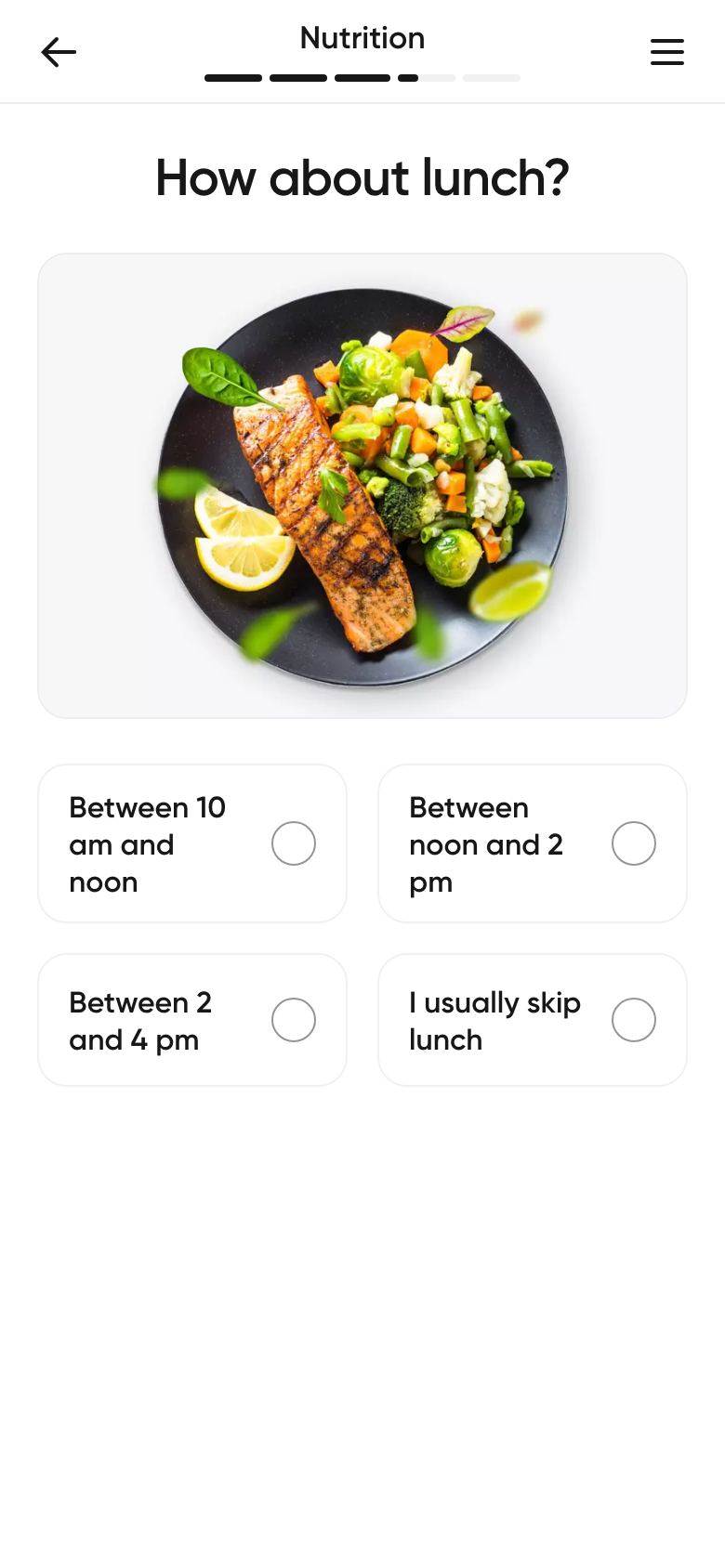
Meal schedule data makes the eventual nutrition component feel earned and relevant.
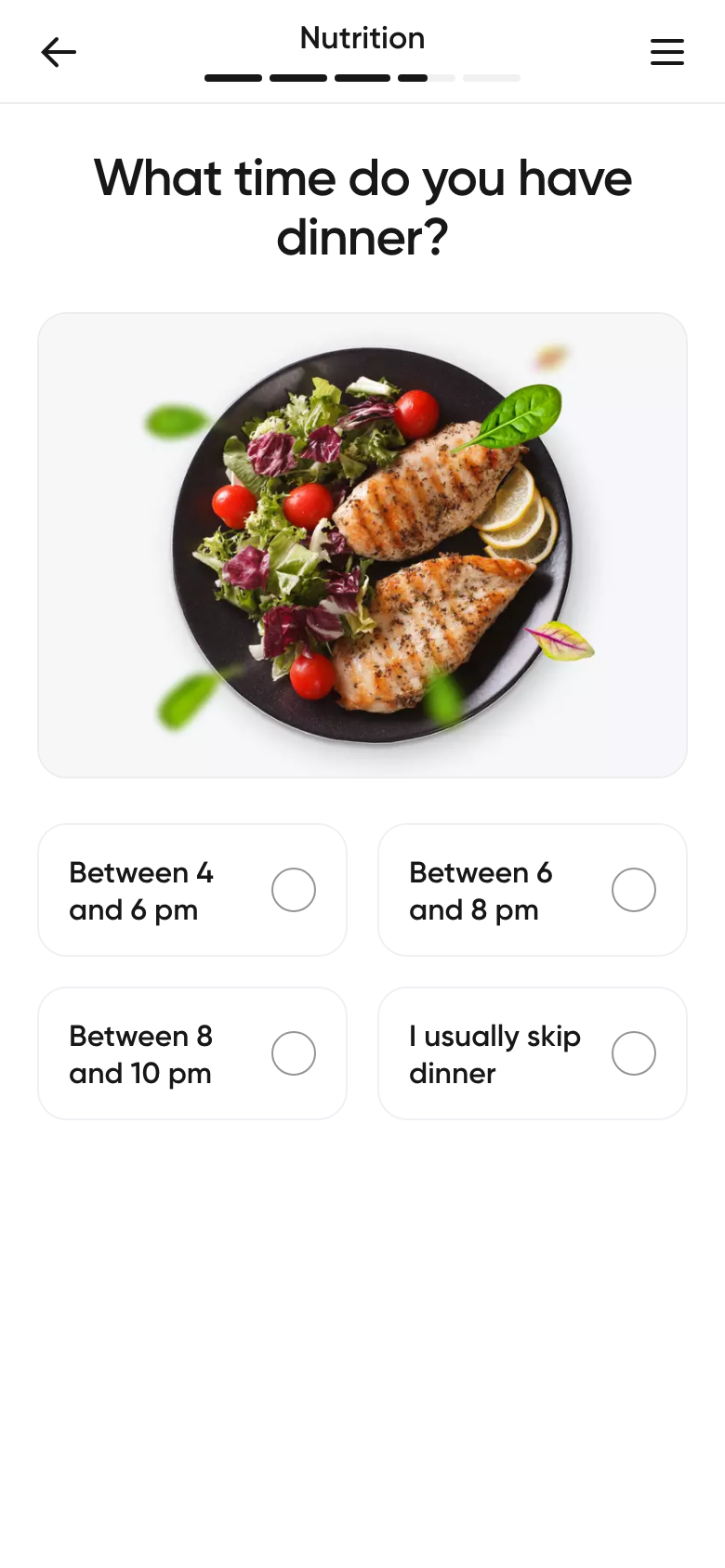
The daily meal rhythm is completed before asking about diet preferences and cravings.
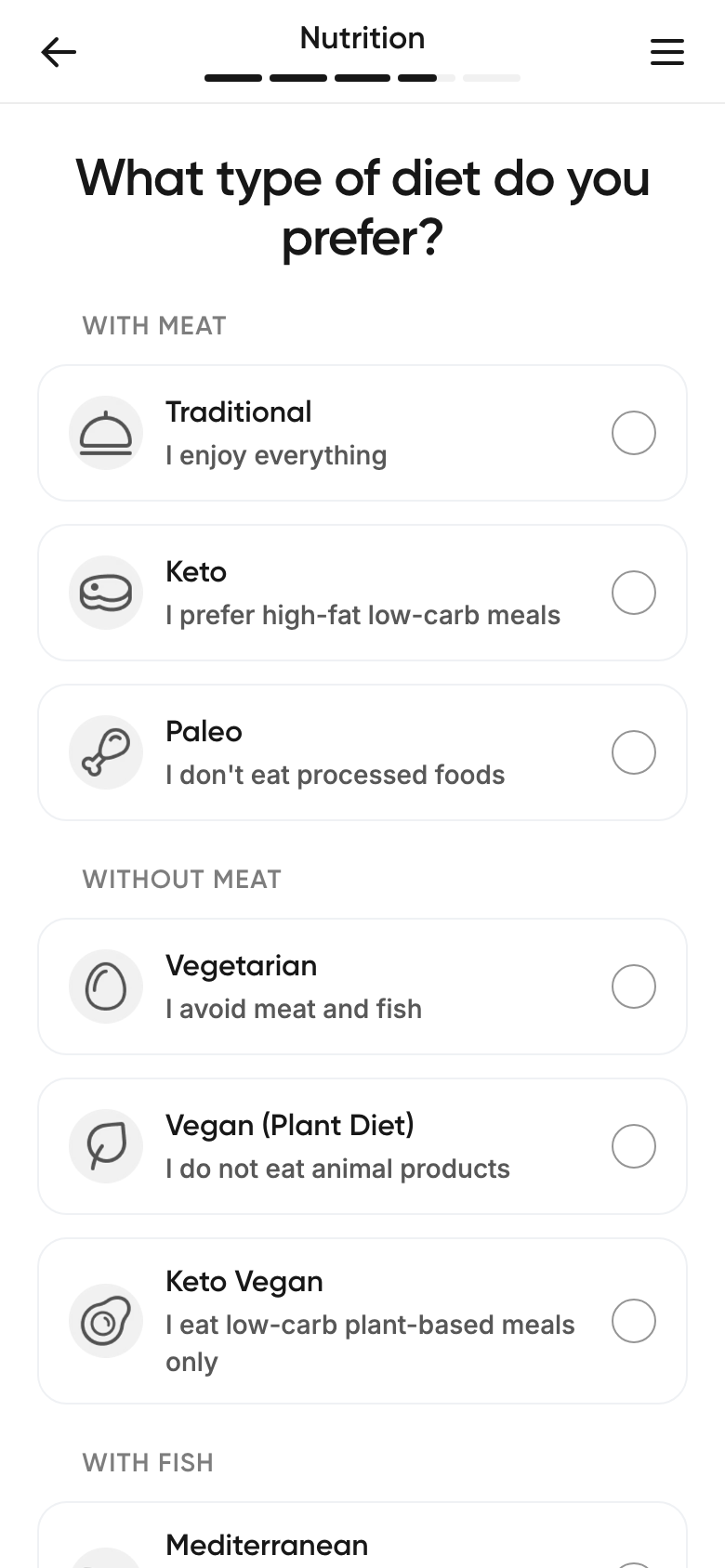
Diet preference selection materially supports the promise of a personalized meal plan.
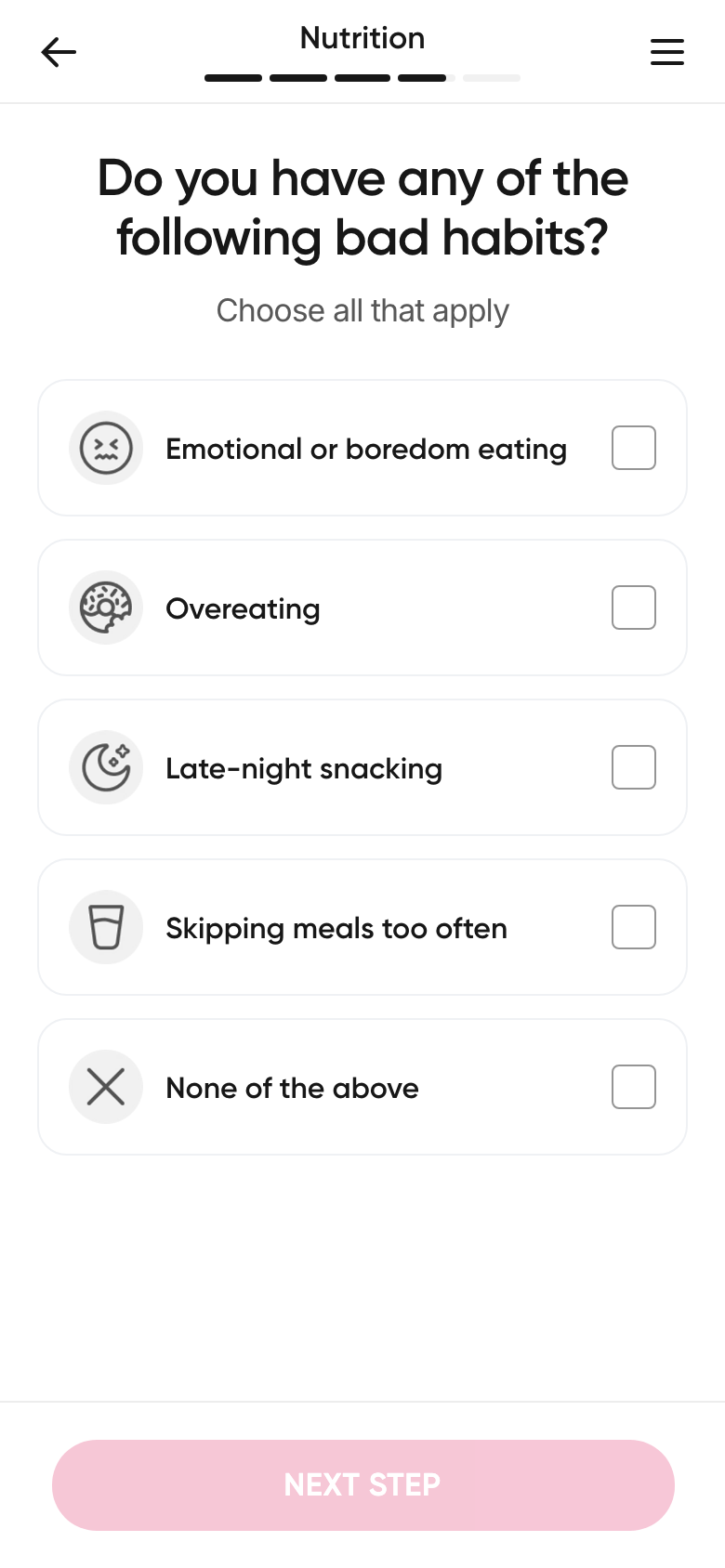
The funnel surfaces behavior-based pain points such as emotional eating, overeating, and skipped meals.
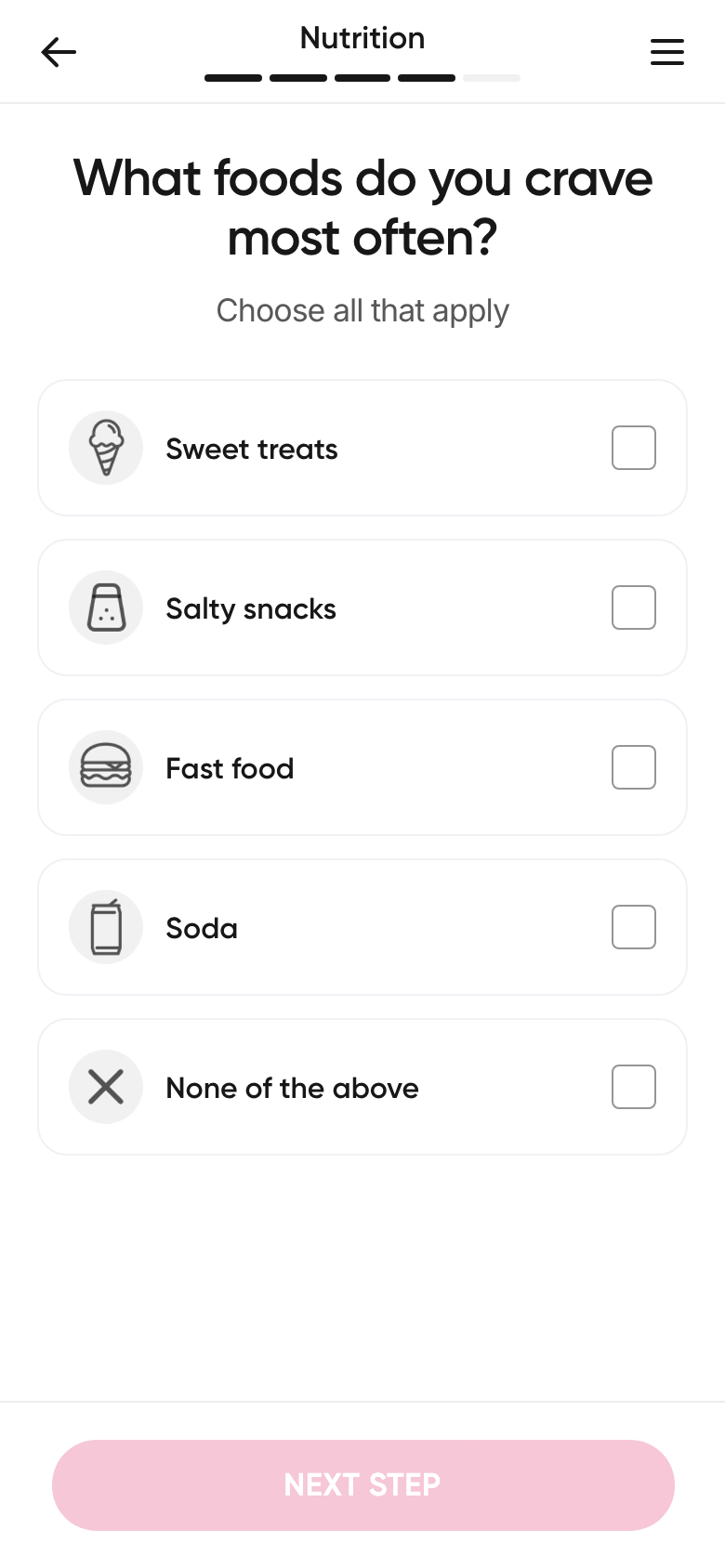
Craving categories deepen the problem diagnosis and create more hooks for the plan to solve.
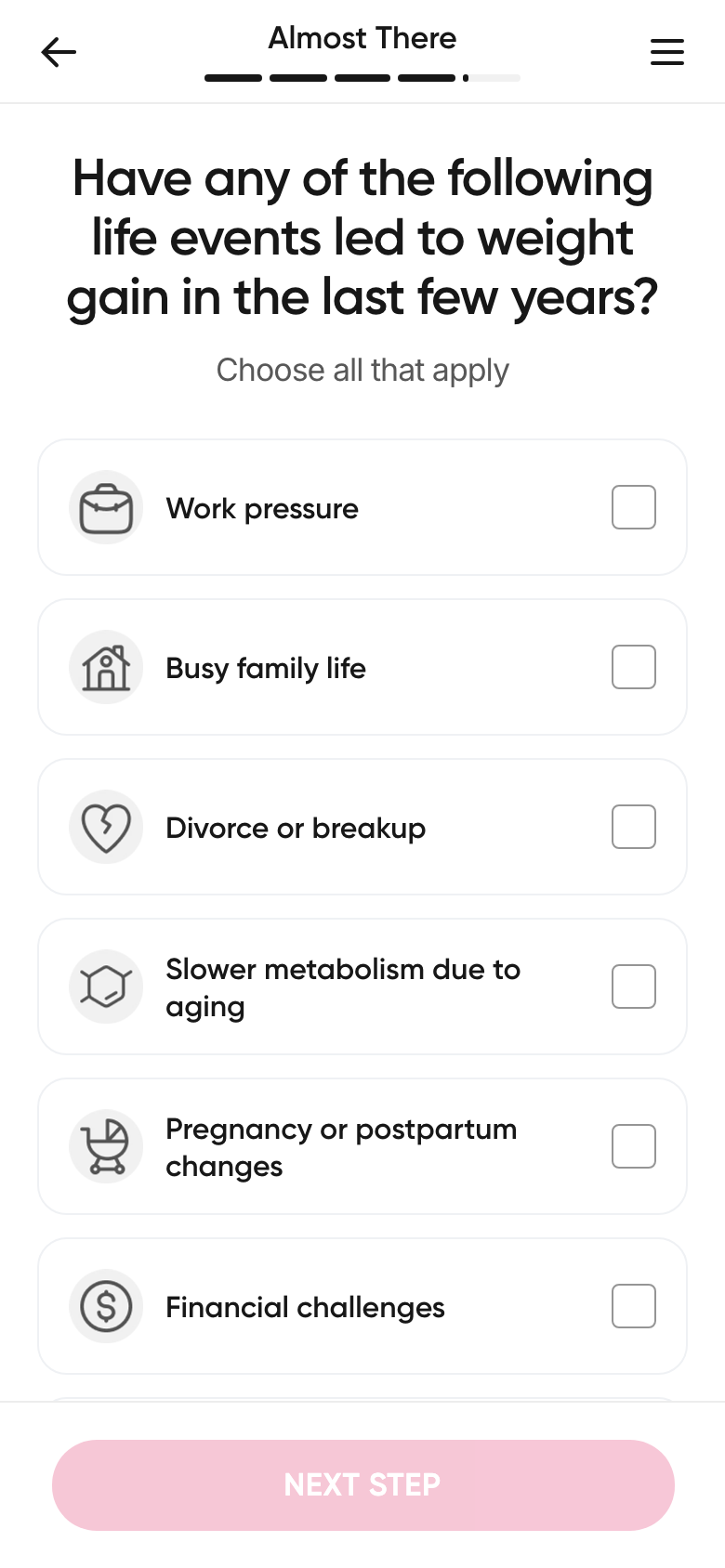
External causes of weight gain reduce blame and make the brand feel more empathetic.
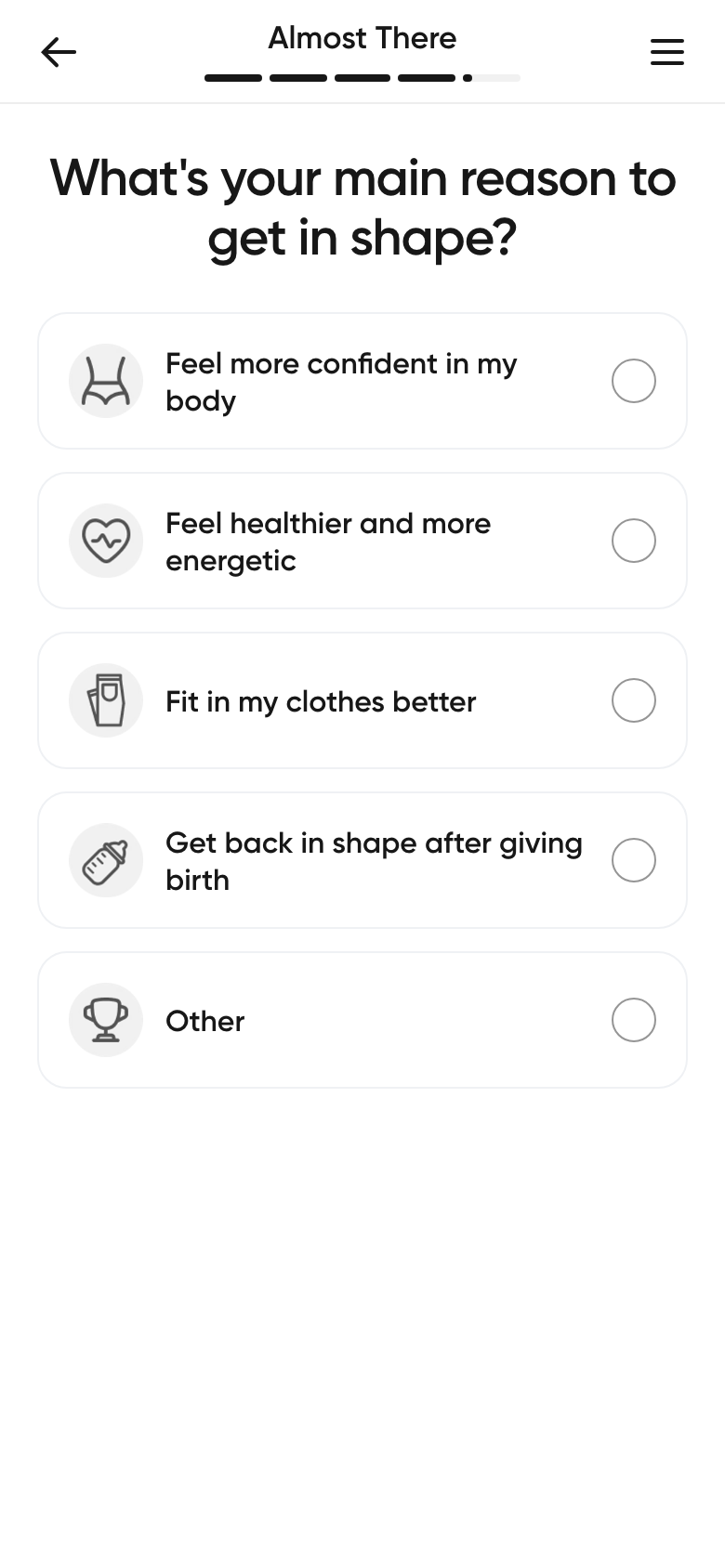
The user restates the primary motivation before entering hard metrics, increasing commitment.
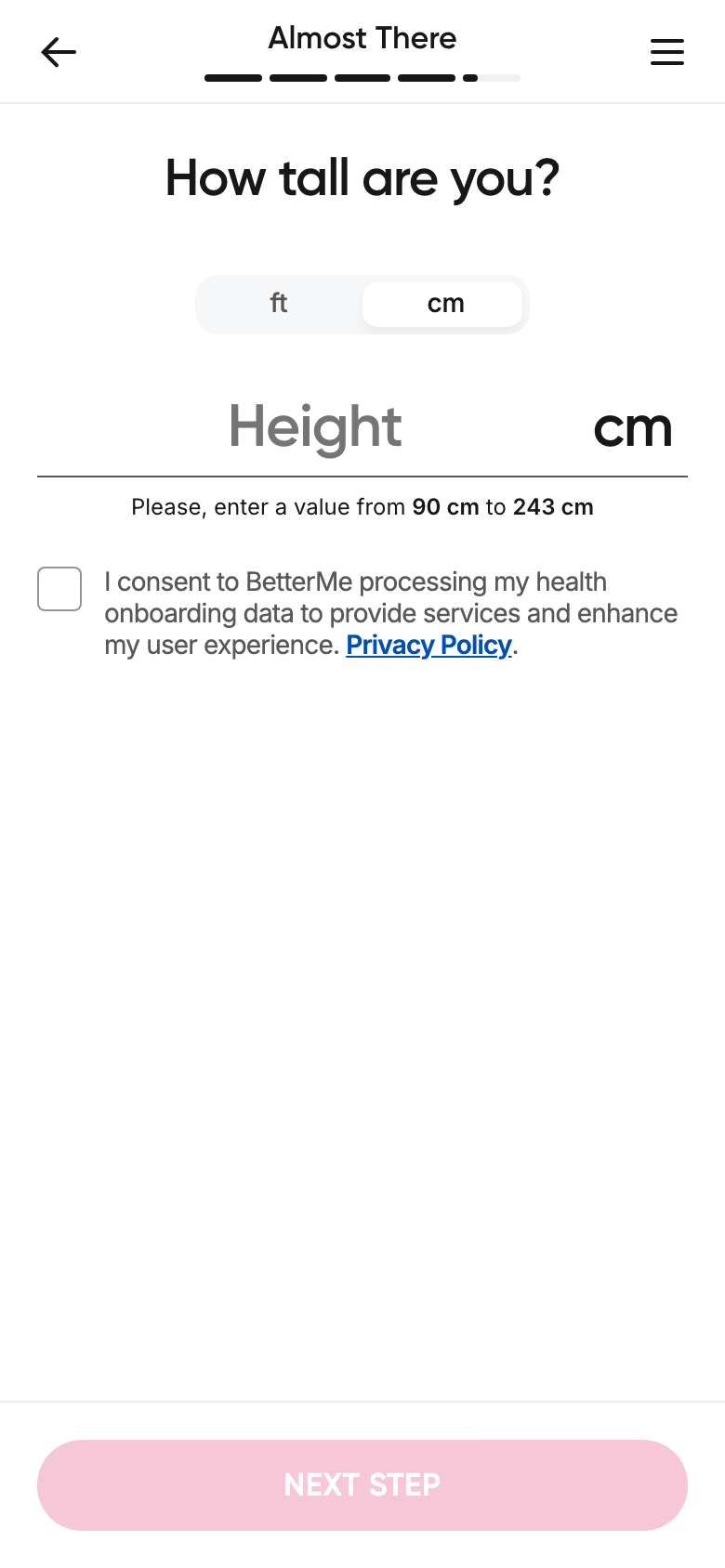
The first health-data entry screen adds consent language and signals a more clinical personalization layer.
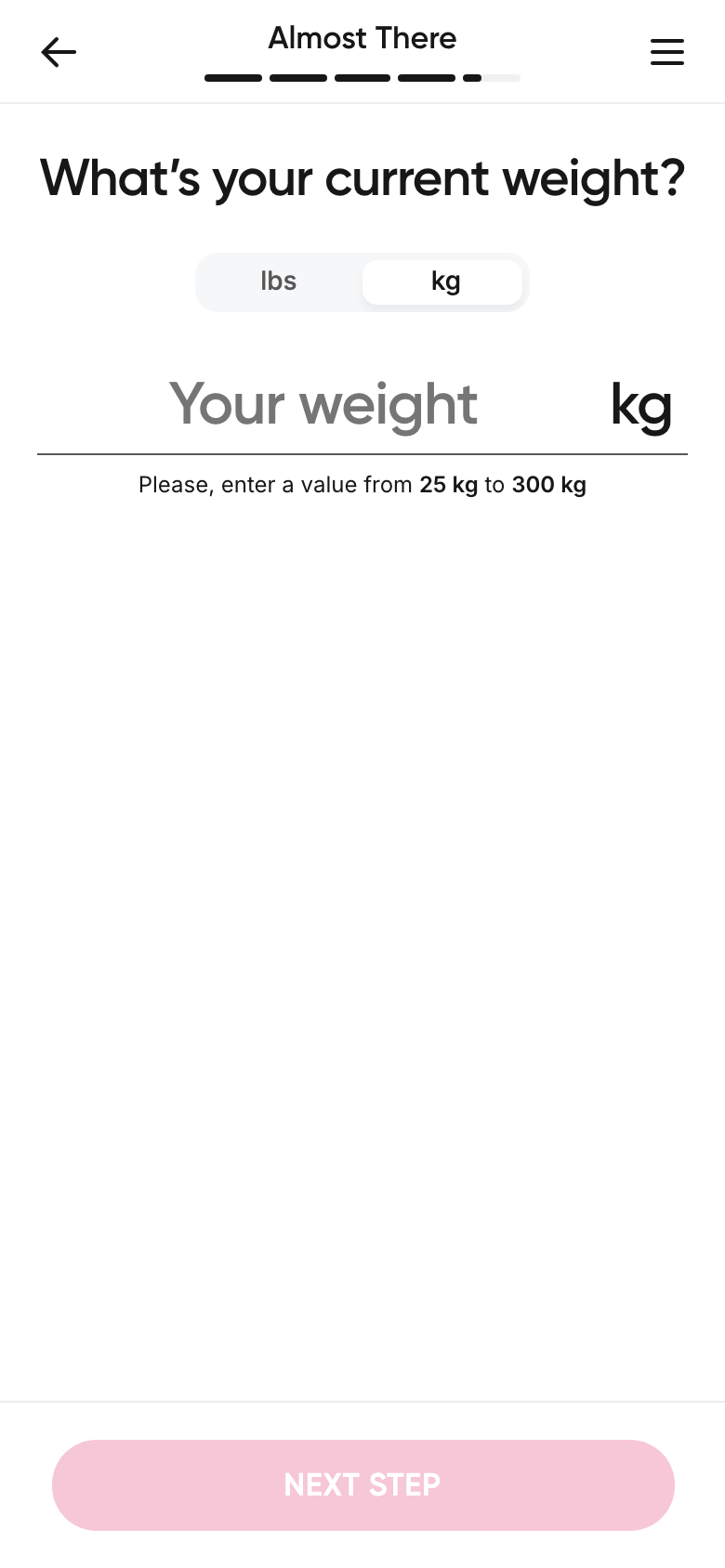
Current weight entry enables BMI feedback and turns data collection into diagnosis.
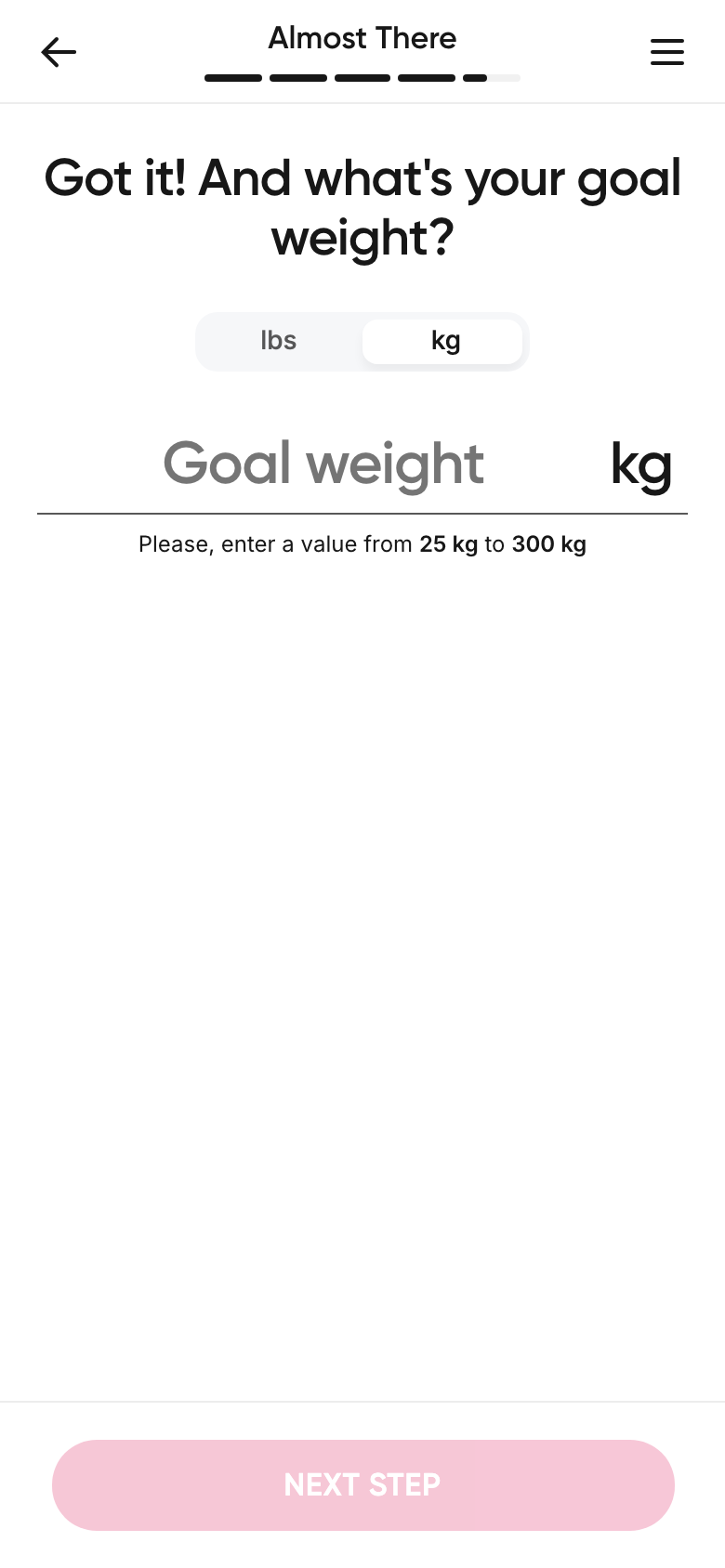
Goal weight lets the user define the desired outcome, making the plan feel like a path to their own target.
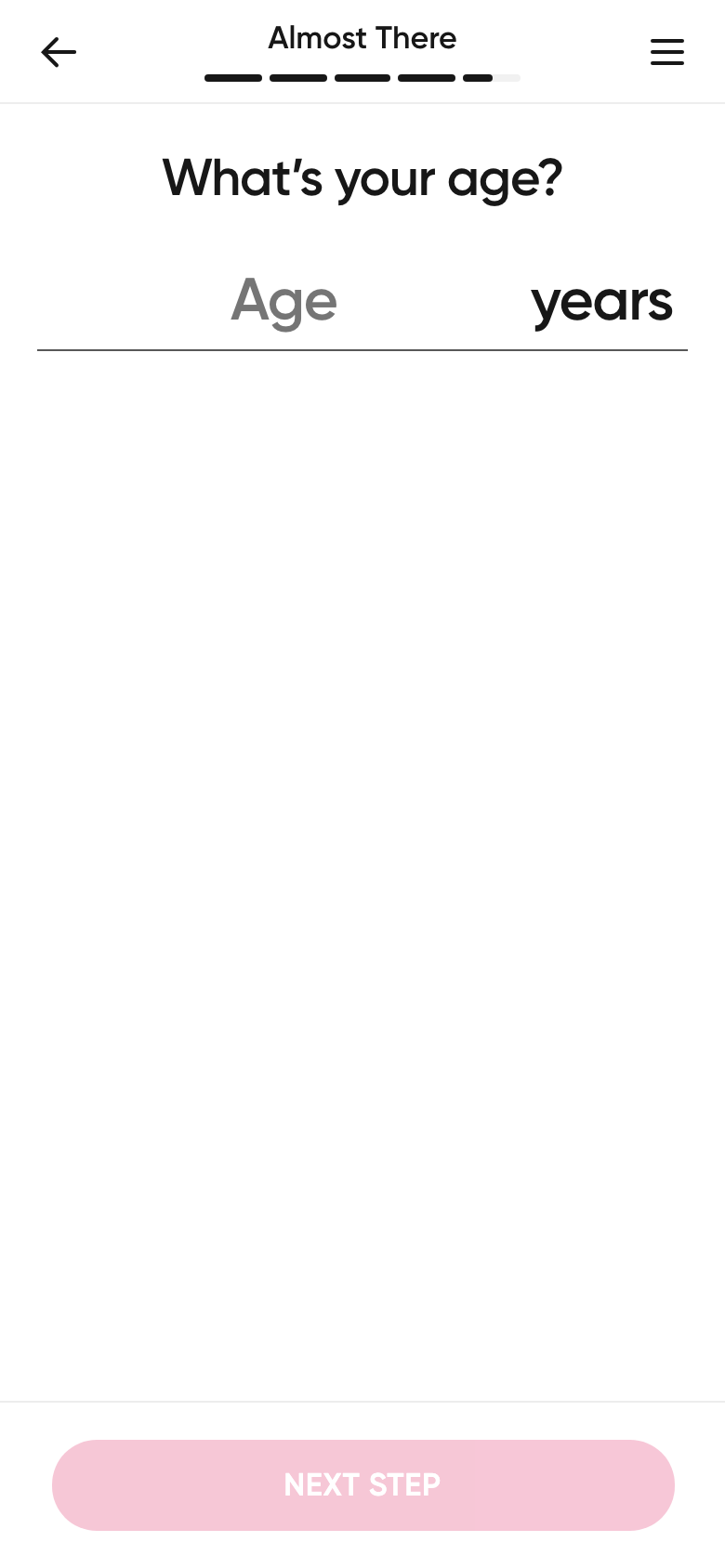
Age is collected as the final demographic input for timeline and recommendation logic.
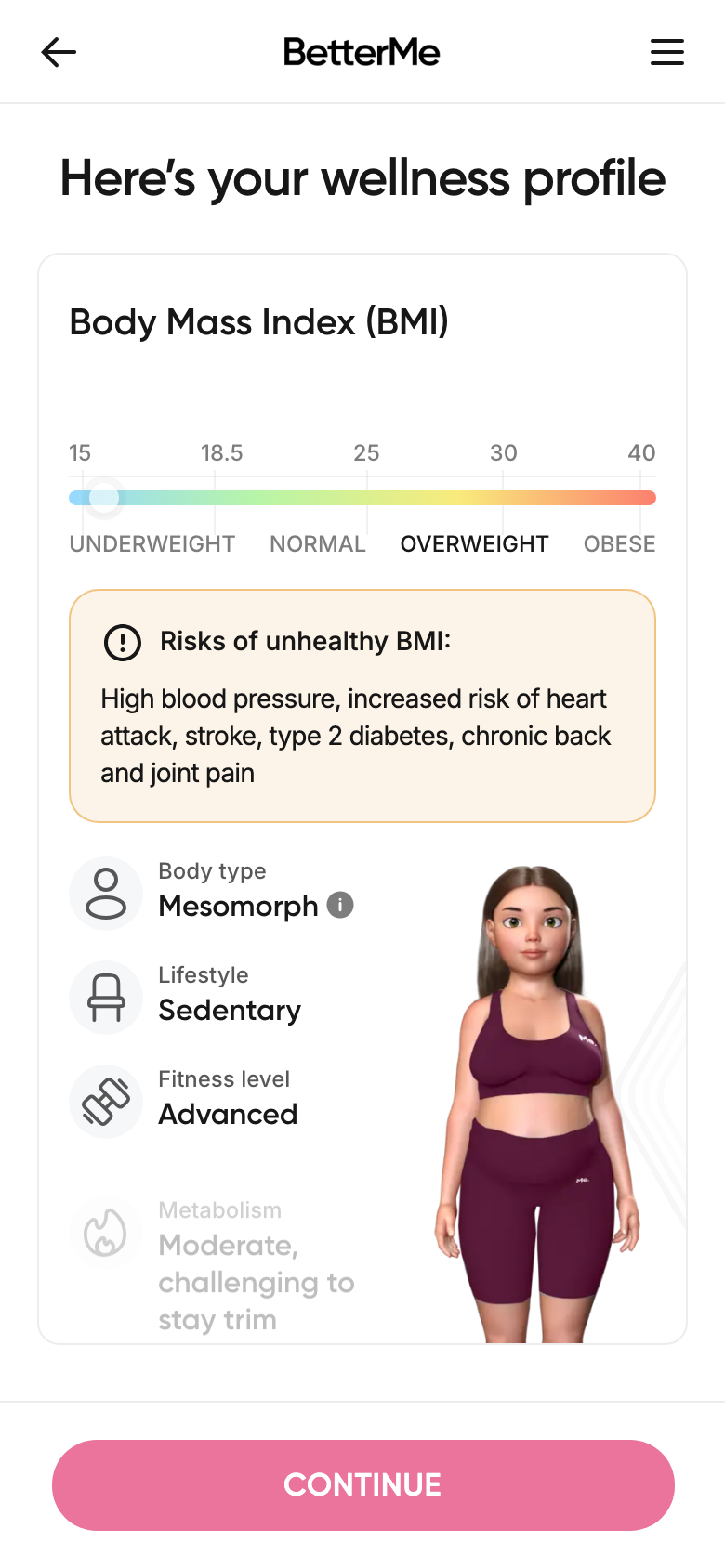
The funnel returns a pseudo-diagnostic profile: BMI, body type, lifestyle, fitness level, and metabolism.
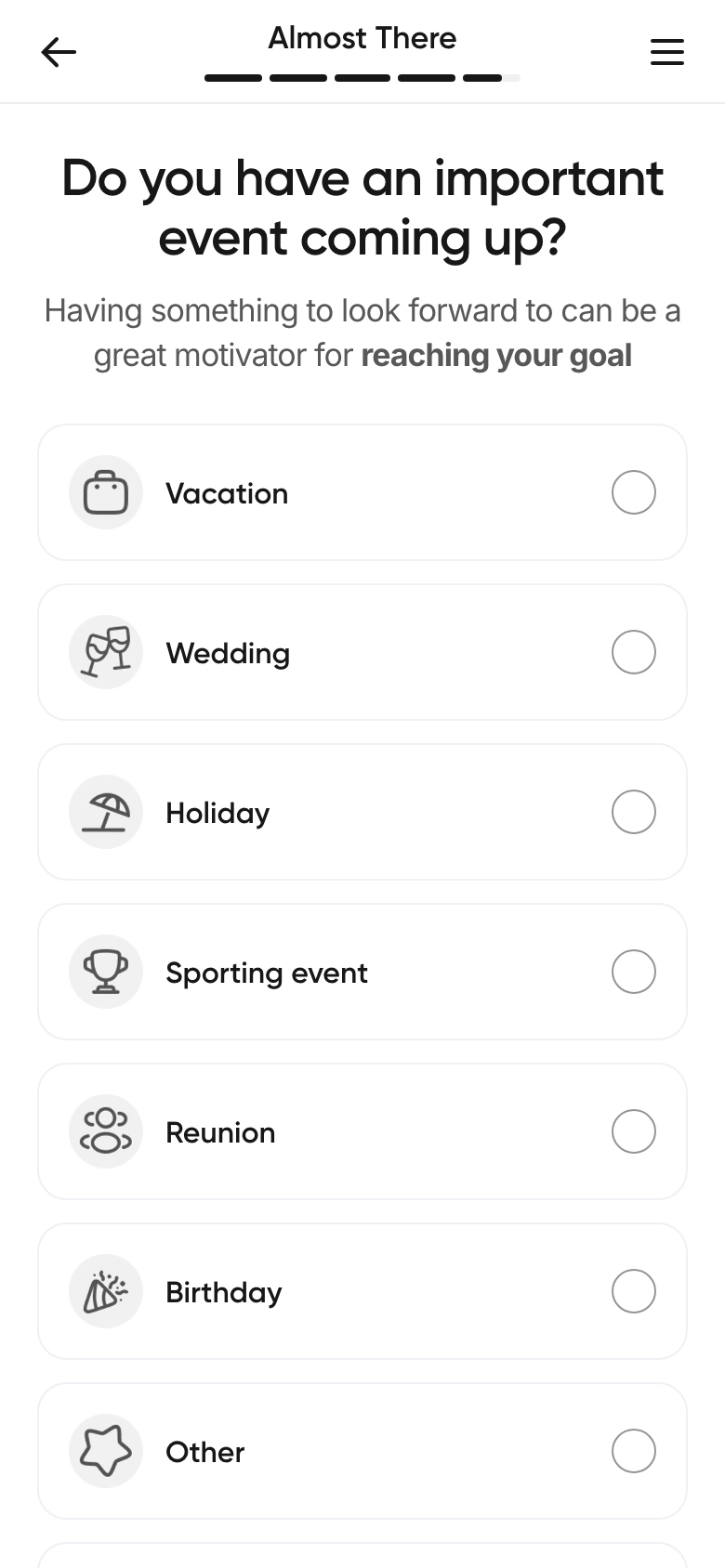
An upcoming event creates urgency and gives the transformation a deadline.
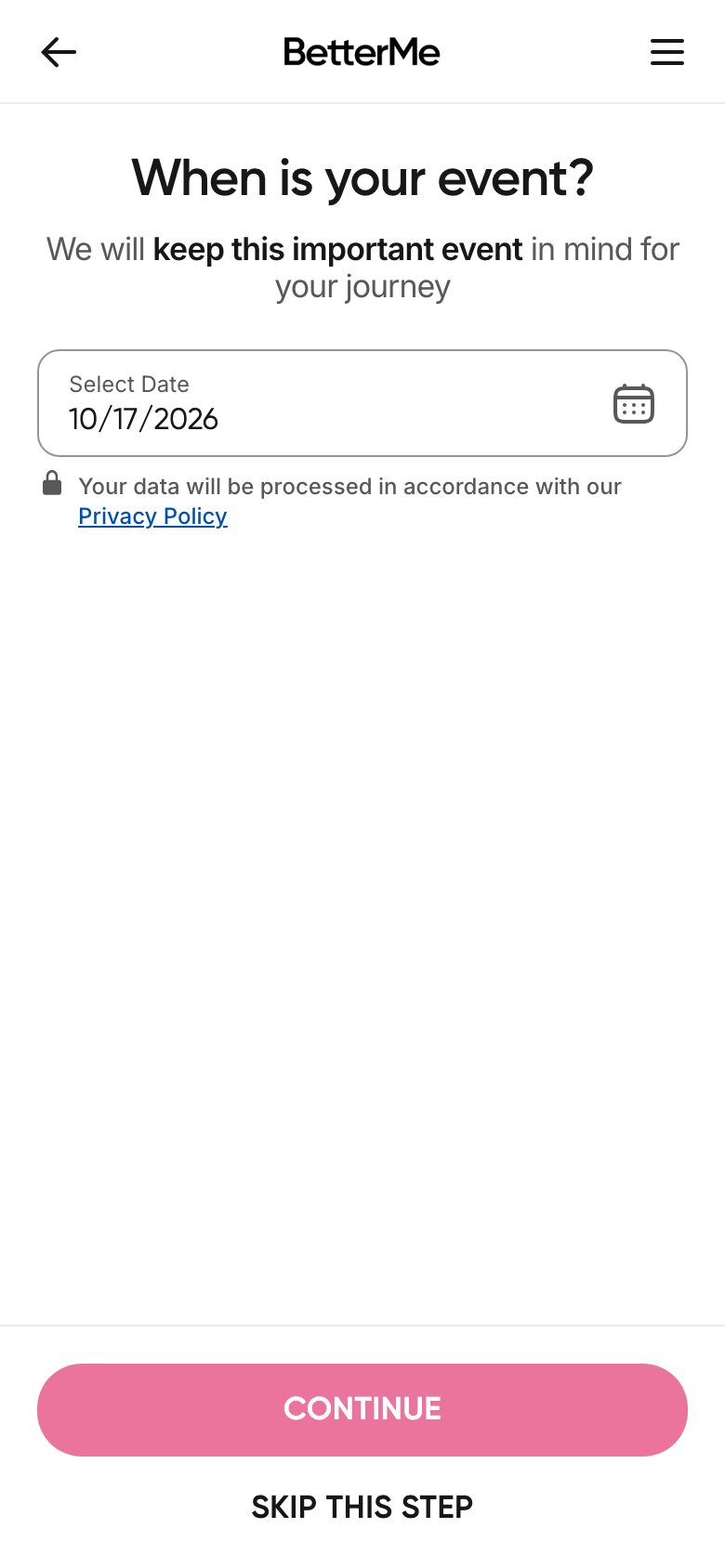
An upcoming event creates urgency and gives the transformation a deadline.
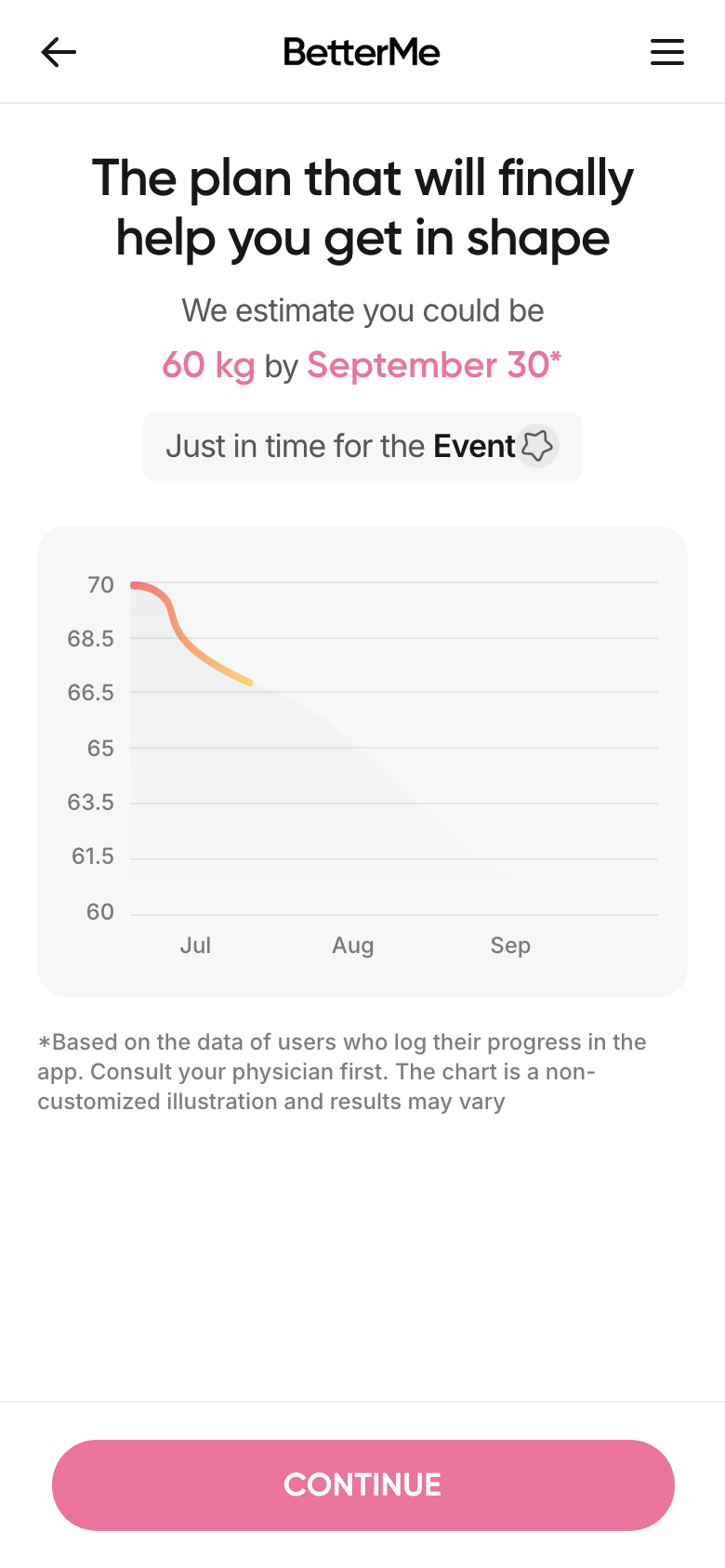
Progress visualization shows the target weight and timeline before the paywall, making the outcome tangible.
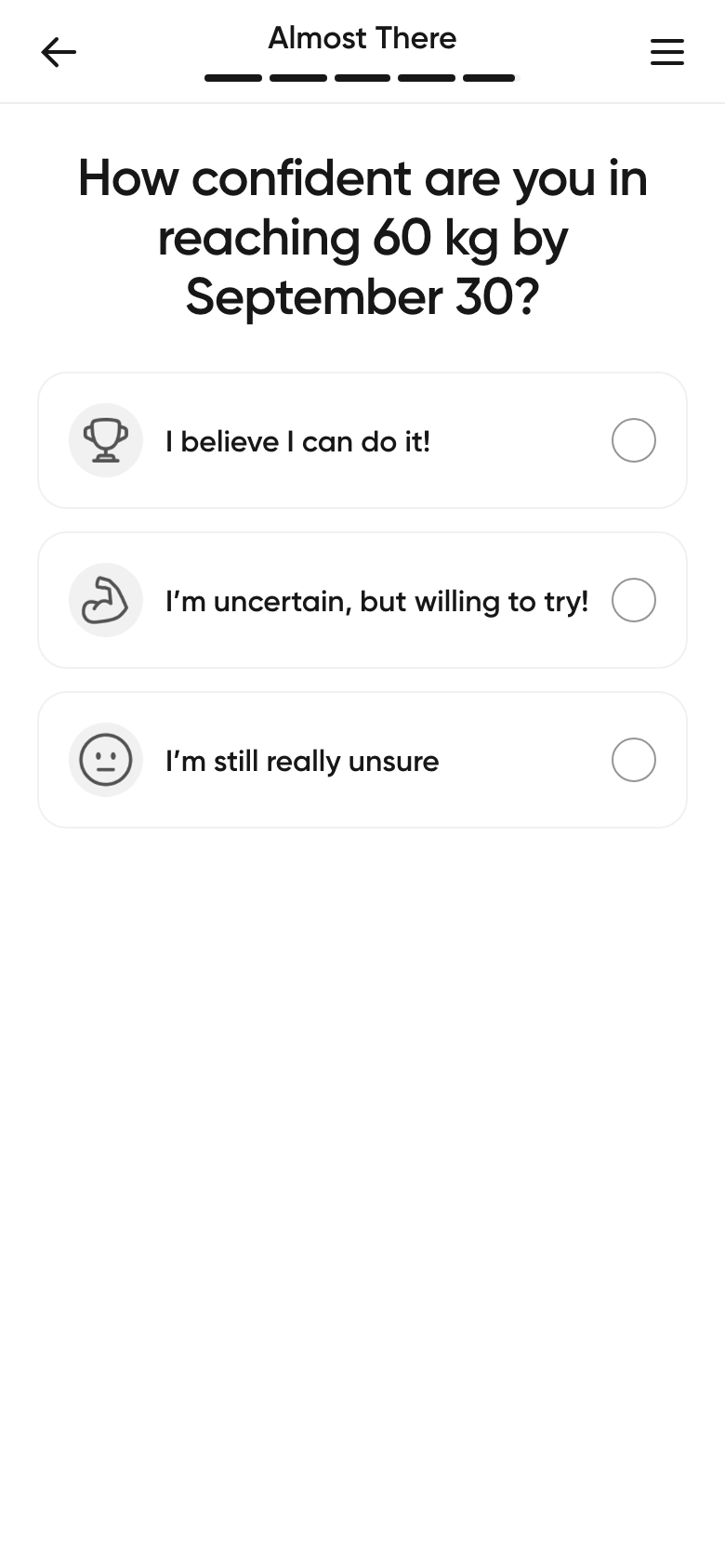
A commitment question prompts the user to self-affirm before the plan generation sequence.
Goal weight lets the user define the desired outcome, making the plan feel like a path to their own target.
Goal weight lets the user define the desired outcome, making the plan feel like a path to their own target.
Goal weight lets the user define the desired outcome, making the plan feel like a path to their own target.
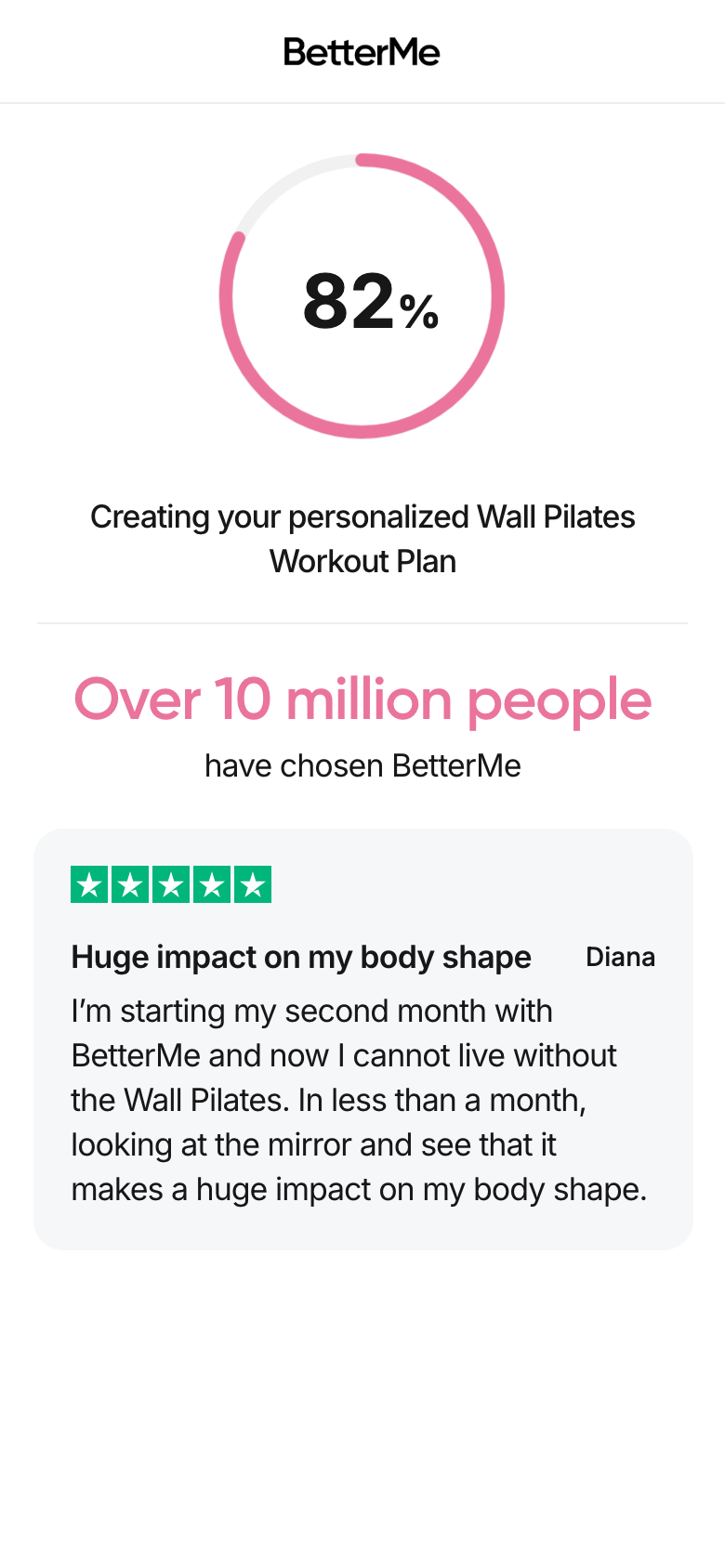
Goal weight lets the user define the desired outcome, making the plan feel like a path to their own target.
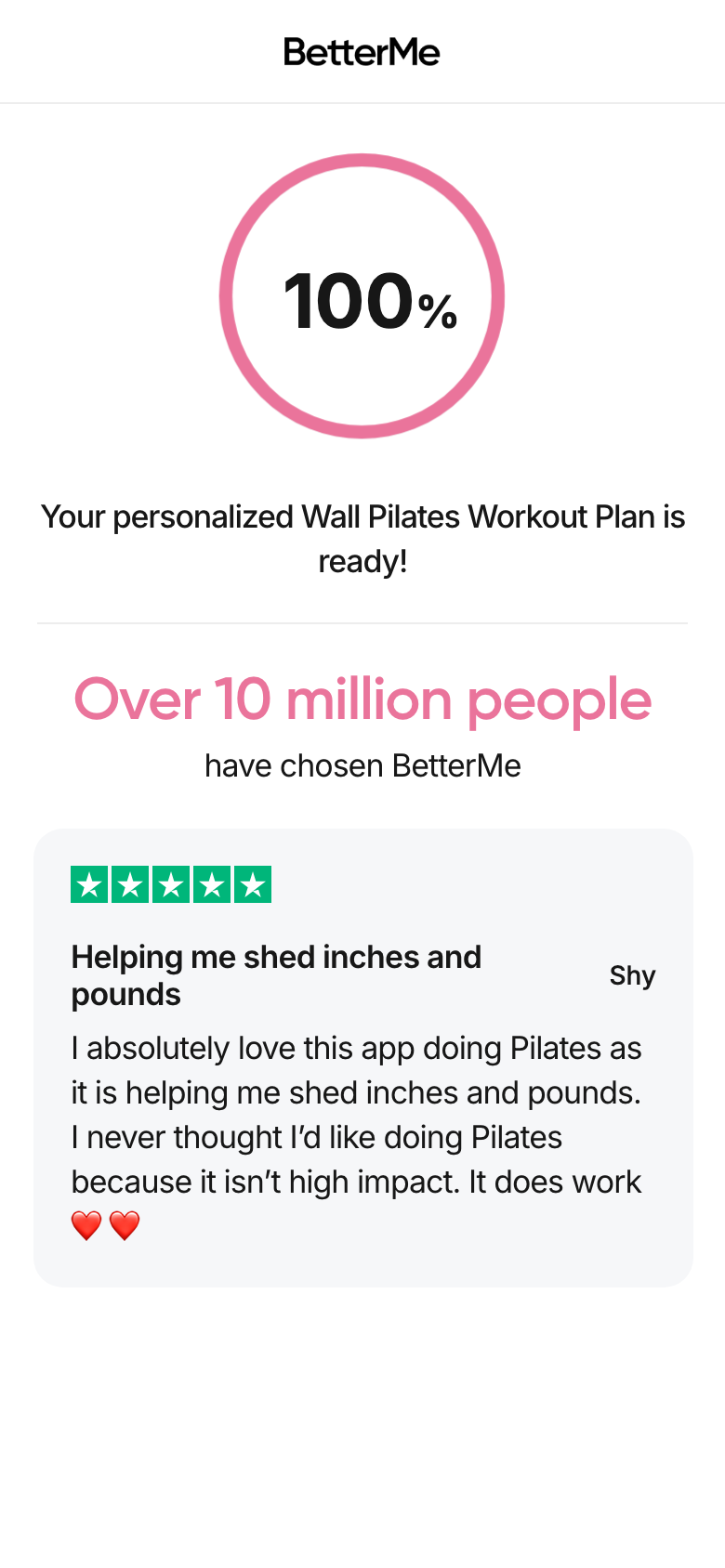
Goal weight lets the user define the desired outcome, making the plan feel like a path to their own target.
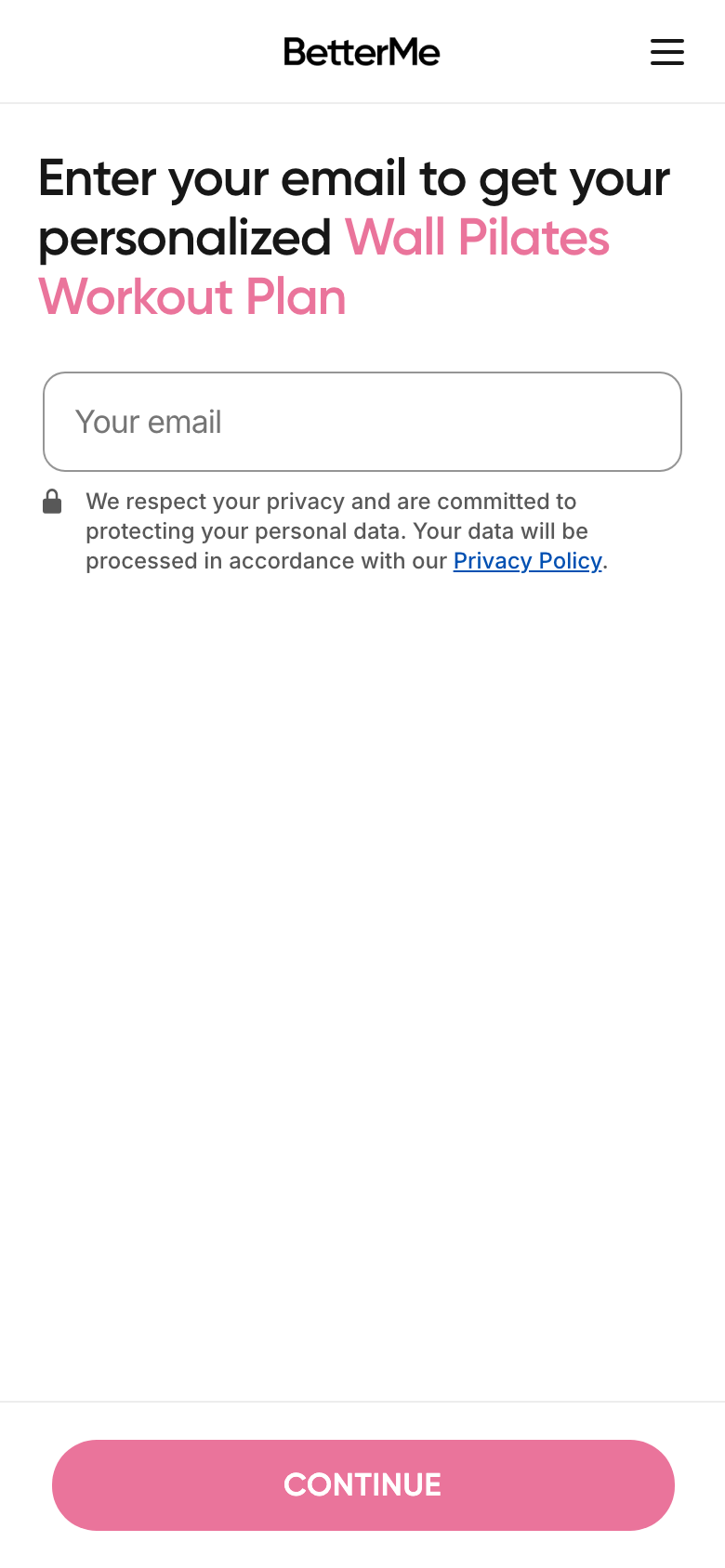
Email capture appears after the user has invested significant effort and the plan is framed as ready.
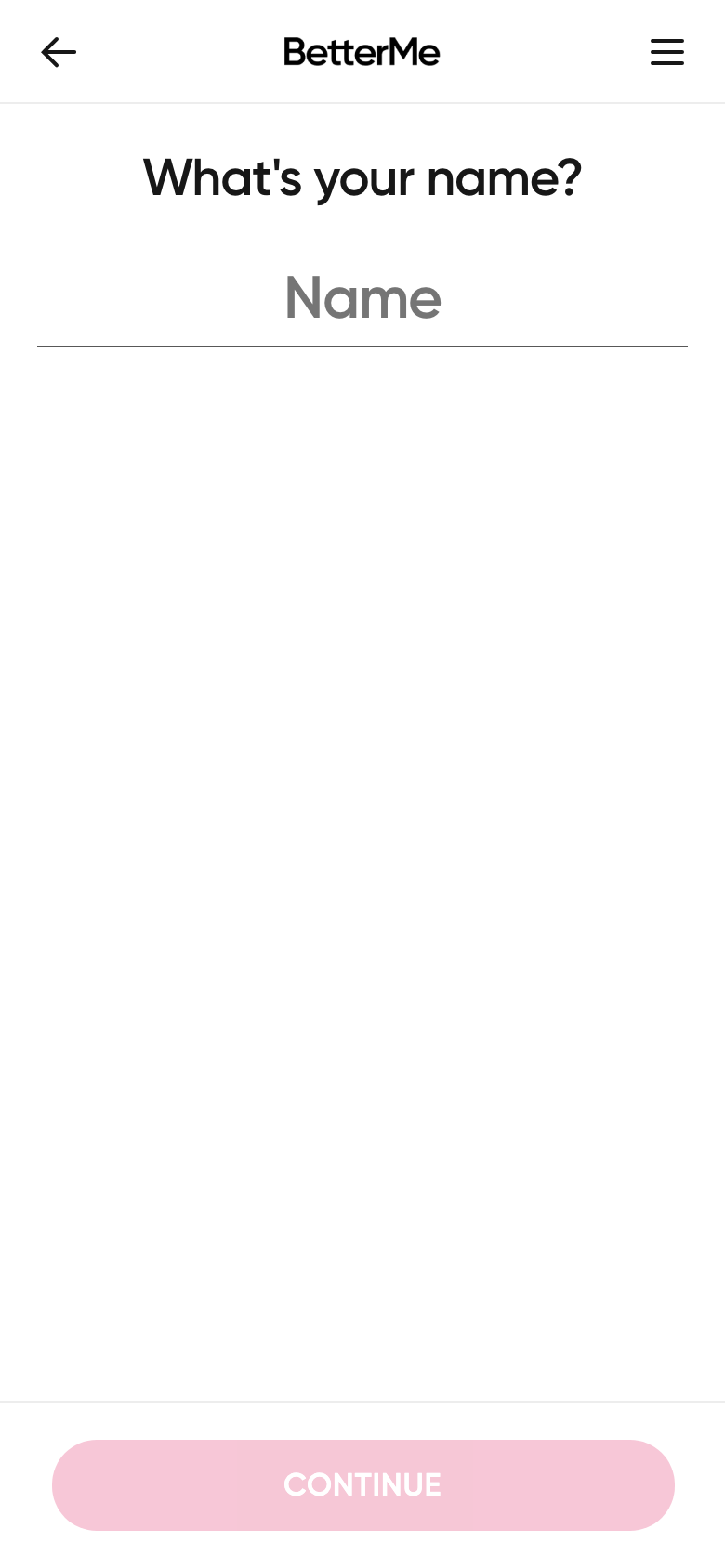
Name capture personalizes the purchase branch immediately before the offer.
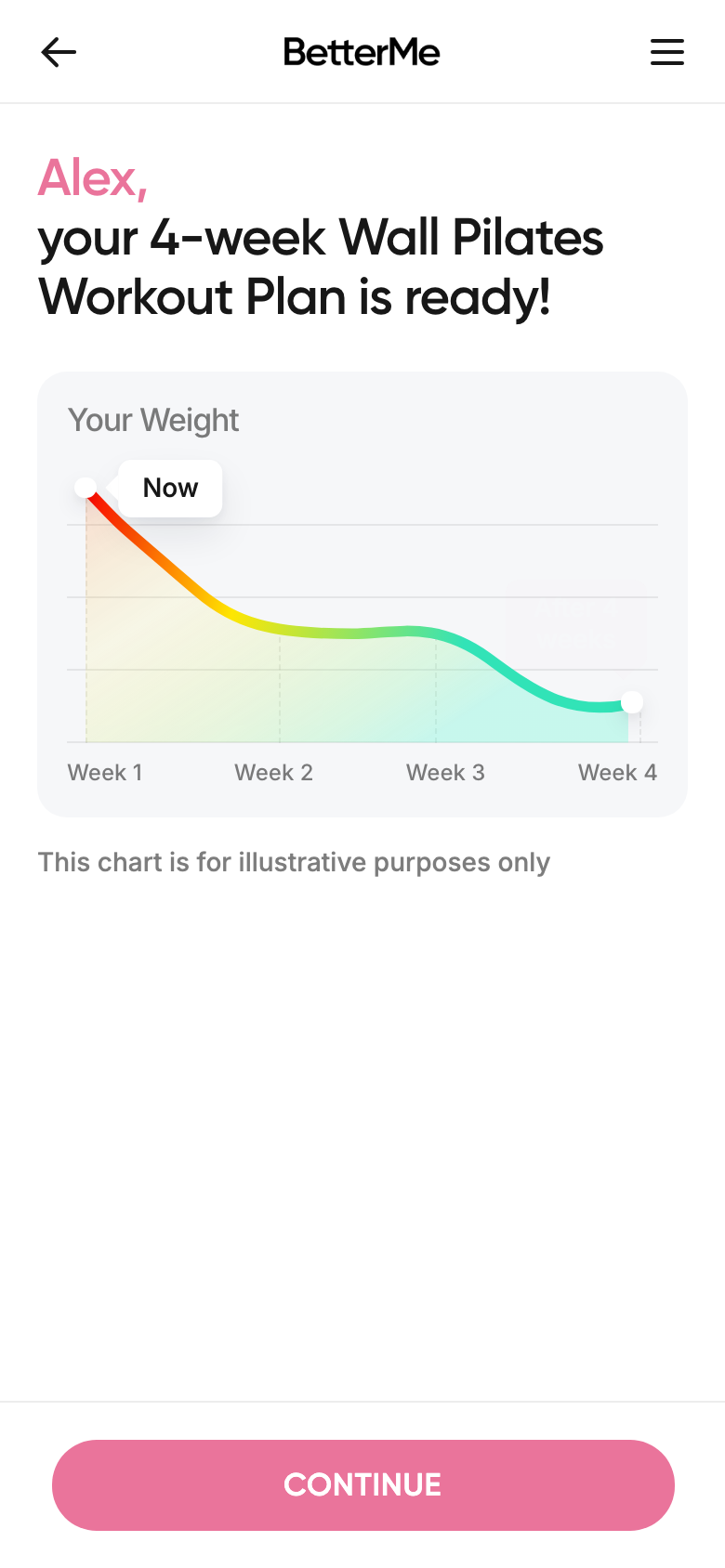
The pre-paywall screen combines first name, a 4-week plan, and a simple progress chart.
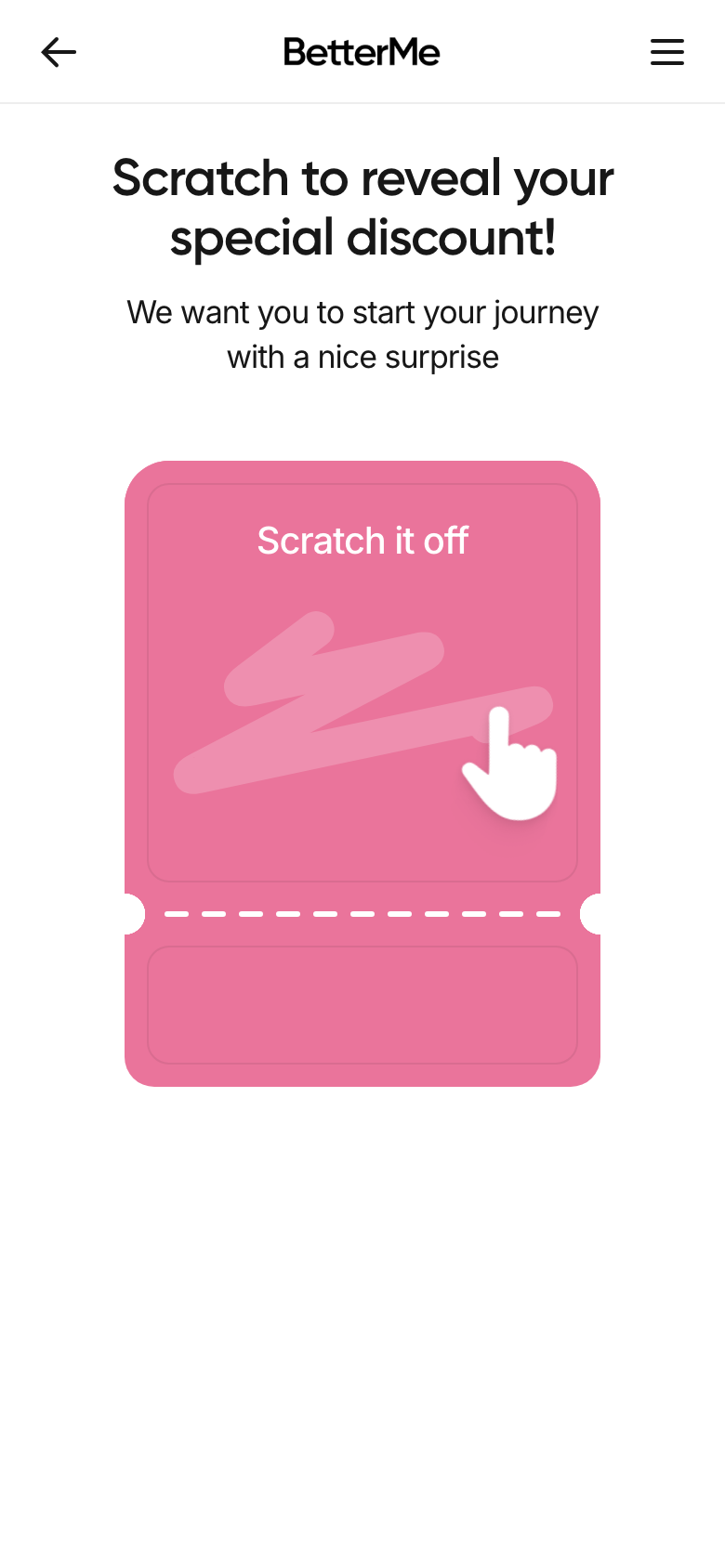
A gamified discount mechanic creates anticipation before the checkout screen.
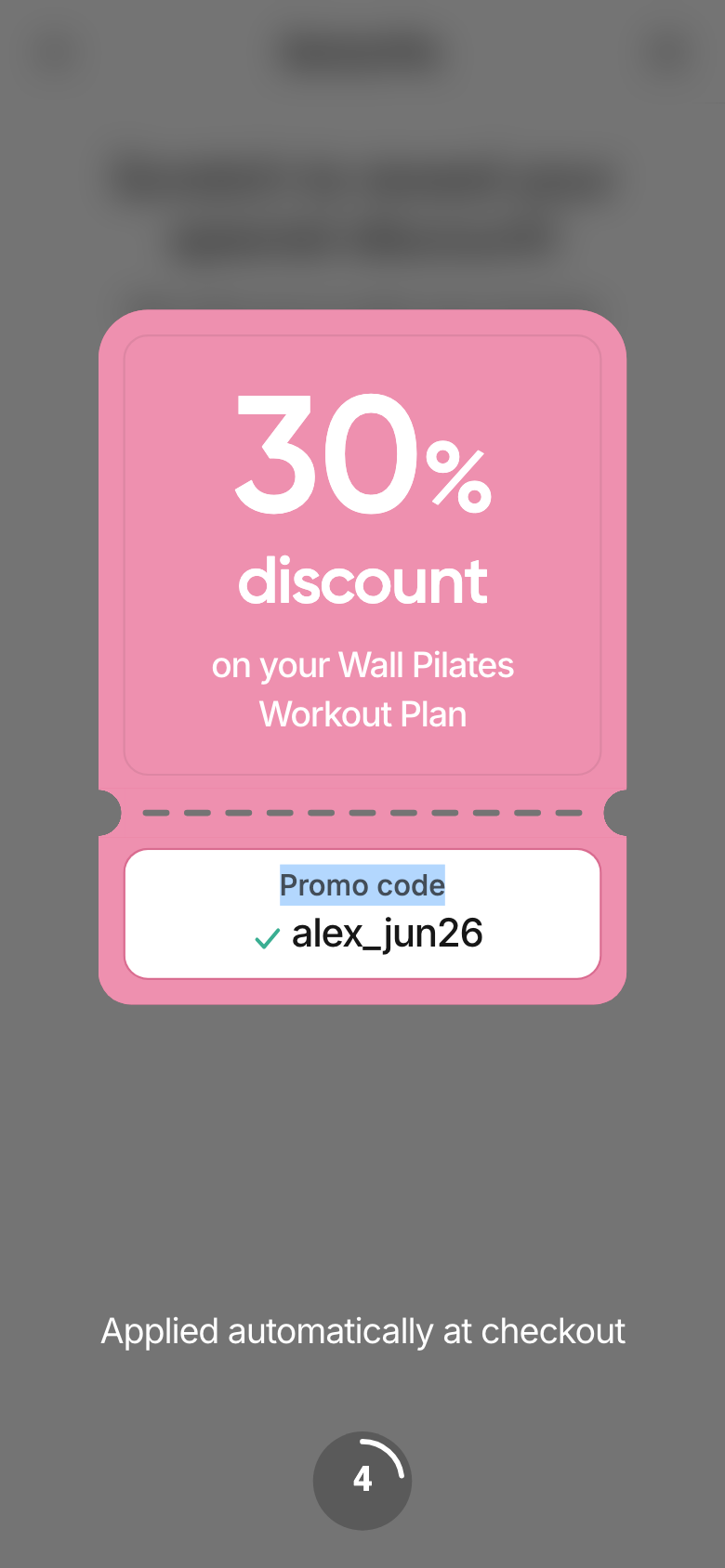
The revealed promo code makes the discount feel earned and automatically applied.
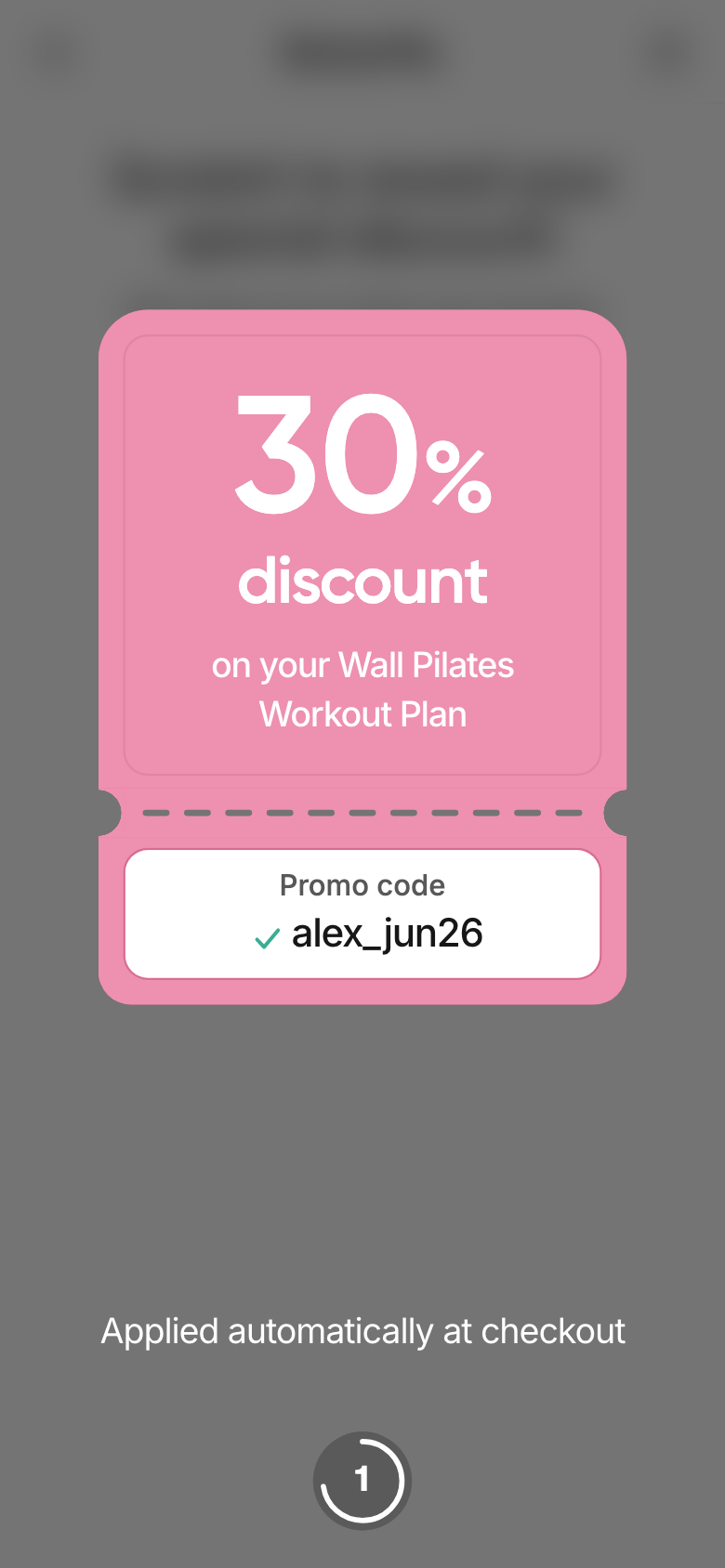
The revealed promo code makes the discount feel earned and automatically applied.
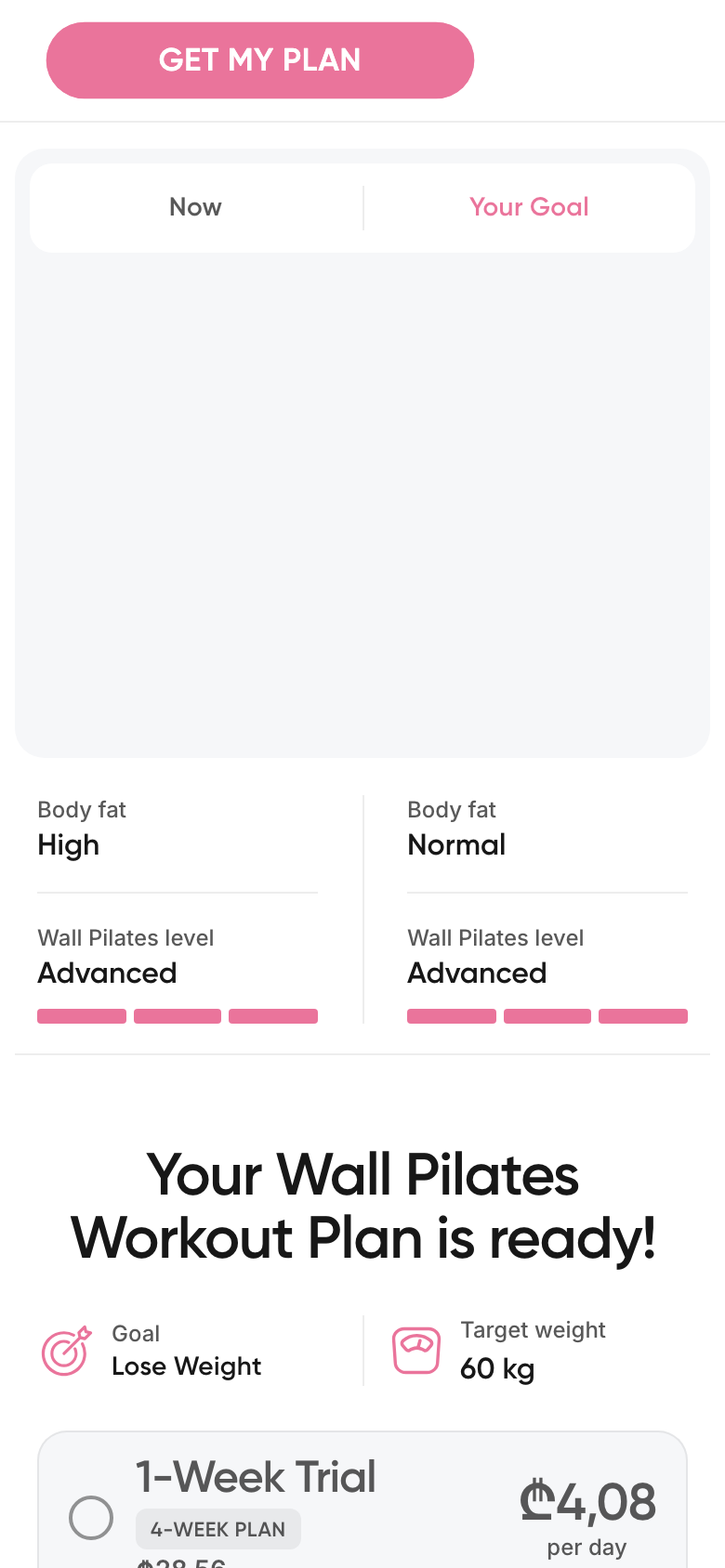
The checkout presents a ready-made plan, trial option, multiple durations, and a direct subscription CTA.
Web2Wave helps subscription apps launch quiz flows, paywalls, checkout, and app unlock — without waiting on app store releases.